


Resource
Meeting Room Glass Partition: Design and Privacy Guide
Planning a meeting room glass partition requires balancing privacy, acoustics, lighting, and collaboration. This guide explains room sizing, glass types, acoustic performance, door options, and practical design considerations to help create productive meeting spaces.
Be-Slim Team
A meeting room is where ideas are discussed, decisions are made, and client relationships are built. Designing an effective meeting room glass partition requires more than selecting attractive glass panels. The right combination of privacy, acoustics, lighting, door systems, and technology integration creates a space that supports productive conversations while maintaining the openness of a modern office.
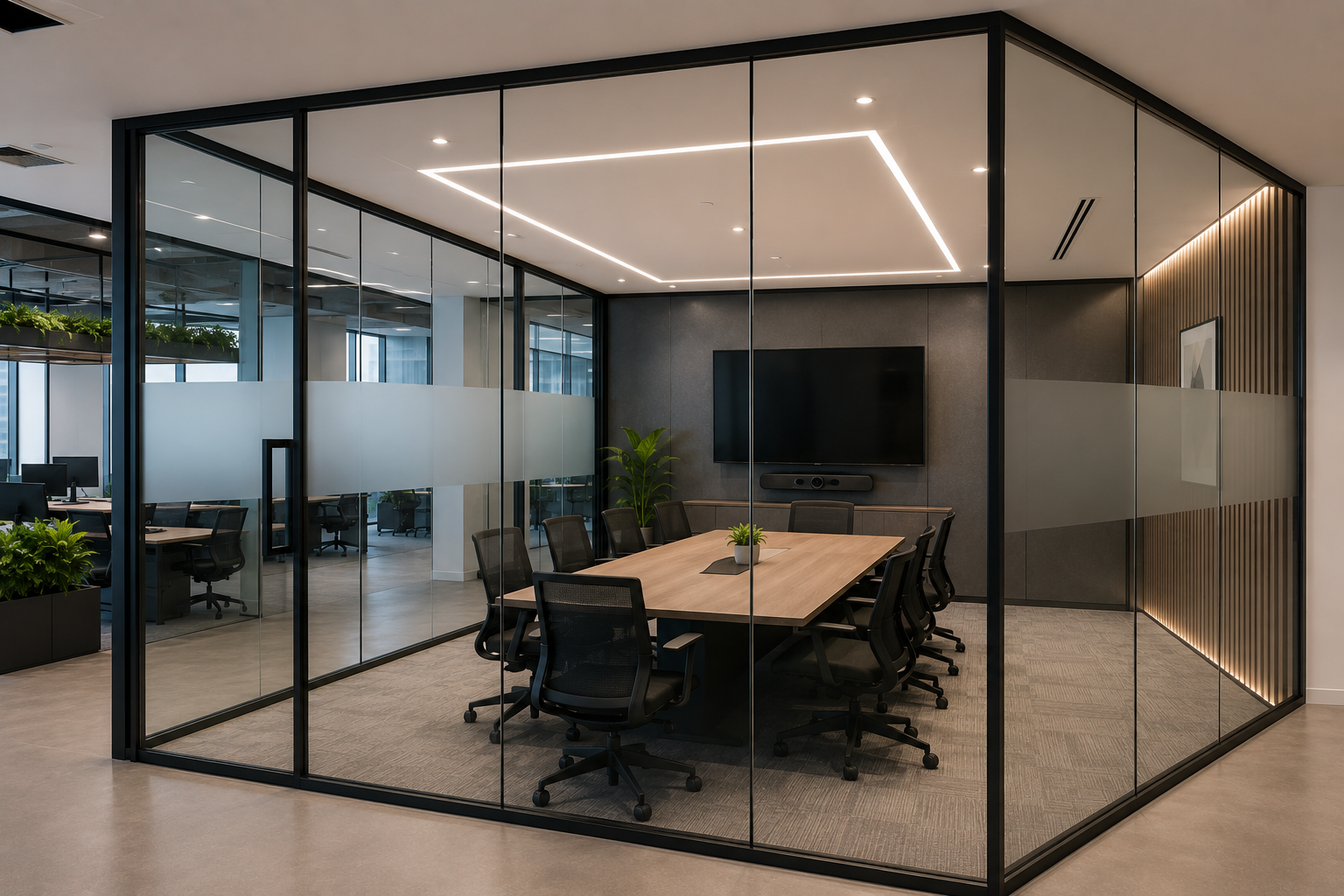
Glass meeting rooms have become the preferred choice in contemporary workplaces because they maximize natural daylight, improve visual connectivity, and make offices feel more spacious. However, selecting the wrong glass type or overlooking acoustic requirements can reduce functionality and compromise privacy.
This guide explains how to design a meeting room glass partition that balances aesthetics, collaboration, and confidentiality for today's workplace.
Choosing the Right Meeting Room Size
The size of a meeting room should reflect how the space will be used. A room designed for quick team discussions has different requirements than one intended for board meetings or client presentations.
| Meeting Room Type | Ideal Use |
|---|---|
| Small Meeting Room | 2–4 people, interviews, one-to-one discussions |
| Medium Conference Room | 5–8 people, team meetings |
| Large Boardroom | 10+ people, presentations and executive meetings |
| Training Room | Workshops and collaborative sessions |
Allow adequate circulation around tables, chairs, and presentation equipment to ensure the room remains comfortable during extended meetings.
Selecting the Right Glass for Your Meeting Room
The glass finish has a direct impact on privacy, collaboration, and the overall atmosphere of the meeting space.
| Glass Type | Privacy | Best Application |
|---|---|---|
| Clear Glass | Low | Collaborative meeting rooms |
| Partial Frosted Glass | Medium | General conference rooms |
| Fully Frosted Glass | High | HR, finance and confidential meetings |
| Switchable Smart Glass | Adjustable | Executive boardrooms |
Clear glass creates openness and transparency, while frosted and smart glass provide greater confidentiality when sensitive discussions take place.
Acoustic Performance Matters More Than Most People Realize
One of the biggest concerns with a conference room glass partition is sound privacy. Contrary to common belief, acoustic performance depends on much more than the glass itself.
Several factors influence how well a meeting room controls sound:
- Glass thickness.
- Laminated acoustic glass where required.
- High-quality aluminium profiles.
- Door seals and drop seals.
- Professional silicone sealing.
- Accurate installation.
When these components work together, a glass meeting room can provide excellent speech privacy while maintaining a modern appearance.
Single Door or Double Door?
The entrance to a meeting room affects accessibility, circulation, and acoustic performance.
| Door Type | Advantages | Best Use |
|---|---|---|
| Single Hinged Door | Better acoustic sealing | Small and medium meeting rooms |
| Double Door | Improved accessibility | Large conference rooms |
| Sliding Door | Saves floor space | Compact offices |
For spaces where confidential conversations are frequent, hinged doors generally provide superior acoustic performance compared to sliding systems.
Visual Privacy Options
Different departments require different levels of privacy. Fortunately, modern glass systems provide several options that maintain a premium appearance while supporting workplace functionality.
- Clear glass for collaborative environments.
- Horizontal frosted bands for seated privacy.
- Full frosted glass for confidential meetings.
- Switchable smart glass for flexible privacy.
- Fluted glass for decorative screening.
The ideal choice depends on how the meeting room will be used on a daily basis.
Technology Integration
Meeting rooms today are expected to support hybrid collaboration. Planning technology before installation avoids costly modifications later.
| Technology | Planning Requirement |
|---|---|
| Display Screens | Wall reinforcement and cable routing |
| Video Conferencing | Camera positioning and lighting |
| Power Outlets | Table and wall access |
| Network Connections | Structured cabling before installation |
Early coordination between interior designers, electrical teams, and partition installers produces a cleaner and more efficient result.
Lighting Design for Glass Meeting Rooms
Glass partitions distribute natural light throughout the office, but artificial lighting should also be planned carefully.
Lighting Tips
- Avoid placing lights directly behind display screens.
- Reduce glare on glass surfaces.
- Use evenly distributed ceiling lighting.
- Combine natural and artificial lighting.
- Consider dimmable lighting for presentations.
Proper lighting improves comfort during long meetings while enhancing the overall appearance of the space.
Common Design Mistakes
- Choosing glass based only on appearance.
- Ignoring acoustic planning.
- Installing undersized meeting rooms.
- Planning electrical services after installation.
- Using inappropriate door systems.
Meeting Room Planning Checklist
| Planning Item | Recommendation |
|---|---|
| Room Size | Based on expected occupancy |
| Glass Type | Match required privacy level |
| Door Style | Select for acoustics and accessibility |
| Lighting | Minimize glare |
| Technology | Plan before fabrication |
| Acoustics | Specify laminated glass if required |
Conclusion
A well-designed glass meeting room design combines openness with functionality. By carefully planning room size, selecting the appropriate glass finish, improving acoustic performance, choosing suitable doors, and integrating lighting and technology from the beginning, businesses can create meeting spaces that are both visually impressive and highly productive.
Rather than treating the meeting room glass wall as simply another office partition, consider it an integral part of workplace planning. A thoughtfully designed meeting room supports better collaboration, protects confidential discussions, and creates a professional environment that reflects the quality of the entire office.
Common questions
No. Frosted glass blocks direct sightlines completely. You will see shapes and movement as vague shadows, nothing more. If someone is standing right against the glass, you might see a blurred outline. At normal room distance, nothing is identifiable.
Yes. Two good strategies. One: frosting to seated height so you’re private when sitting at the desk but not when you stand. Two: curtains or blinds installed next to the glass that you close when necessary. Practitioners also use switchable smart glass (that go frosted with a switch) but that is a more expensive option.
Only if you want it to. Clear glass gives a fishbowl effect and some directors prefer it because it indicates transparency. If you are looking for privacy, then opt for frosted or fluted glass and the cabin becomes a true private space. The glass does not dictate. It’s your choice.