


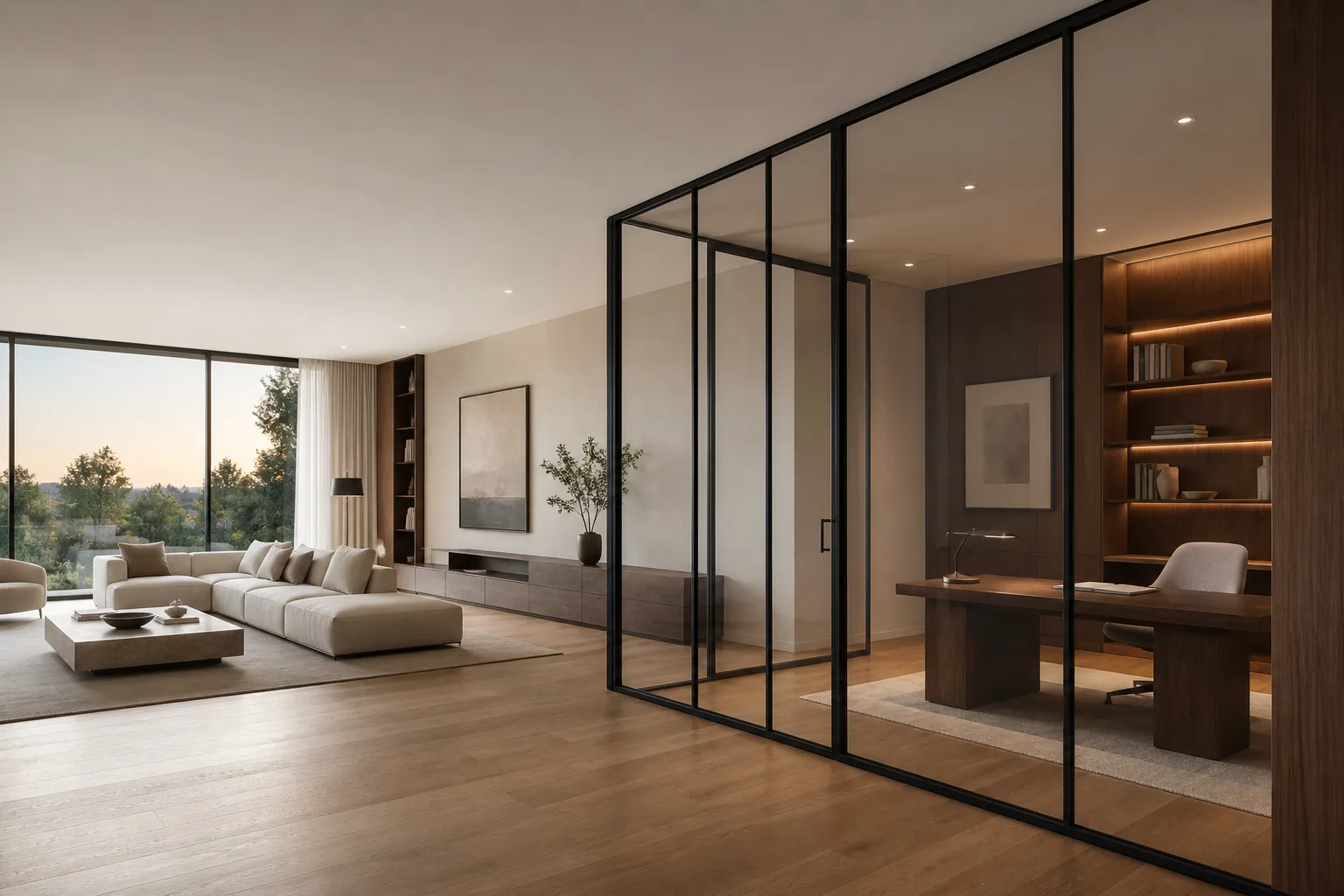
Glass that sees.
Walls that don't.
Slim profile glass partitions for living zones, kitchen transitions, study corners, and bedroom separations. Every room, divided without closing it.
Home slim profile glass partitions. Engineered by Birkan since 2000.
Where a home partition makes the most sense.
The right system depends on what the room needs to do, how much separation is required, and whether the partition should move.
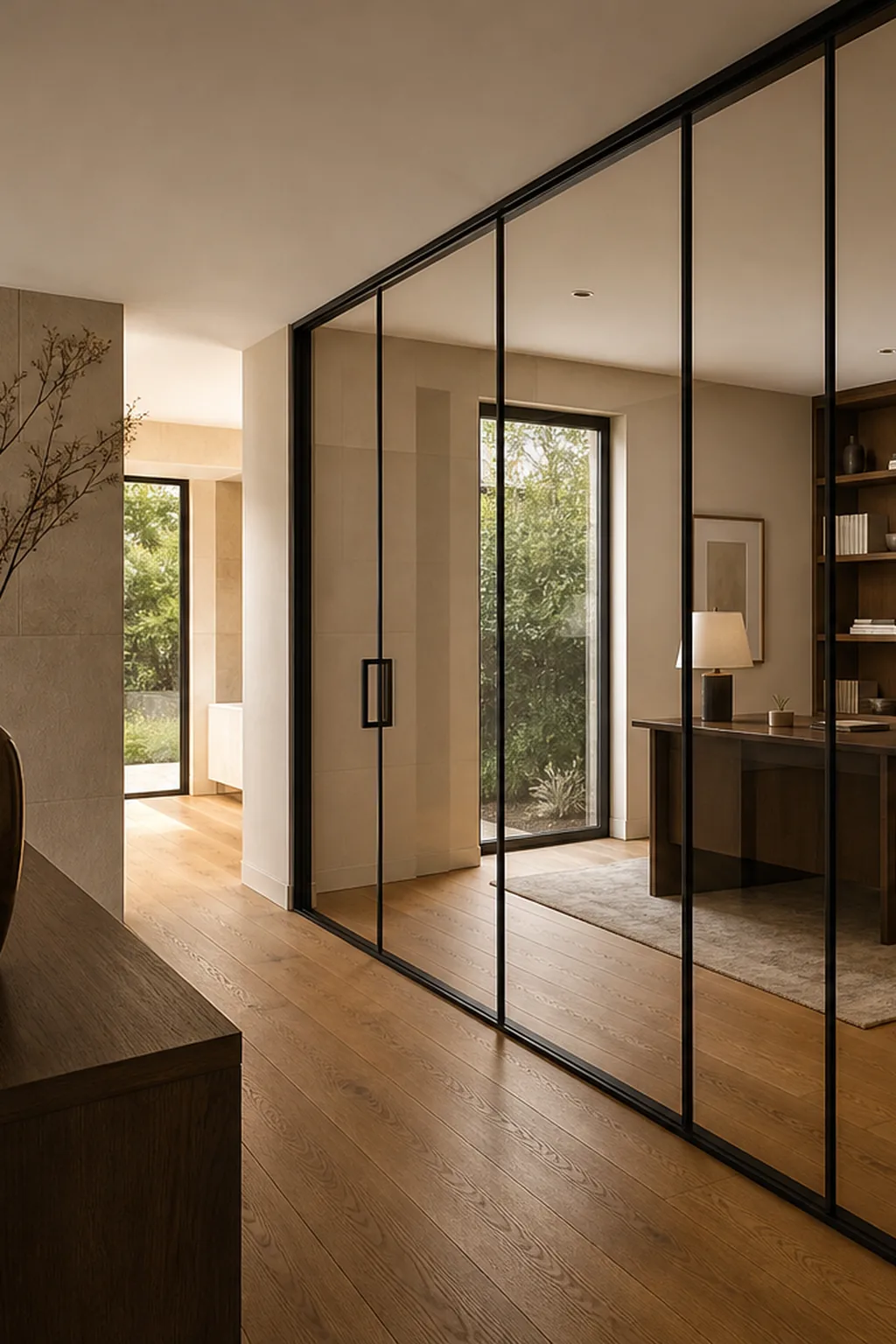
Living / dining separation
Keep the living and dining areas visually connected or separate them at will. A slim sliding partition clears completely when you want one open room, closes for a defined dining space without a wall.
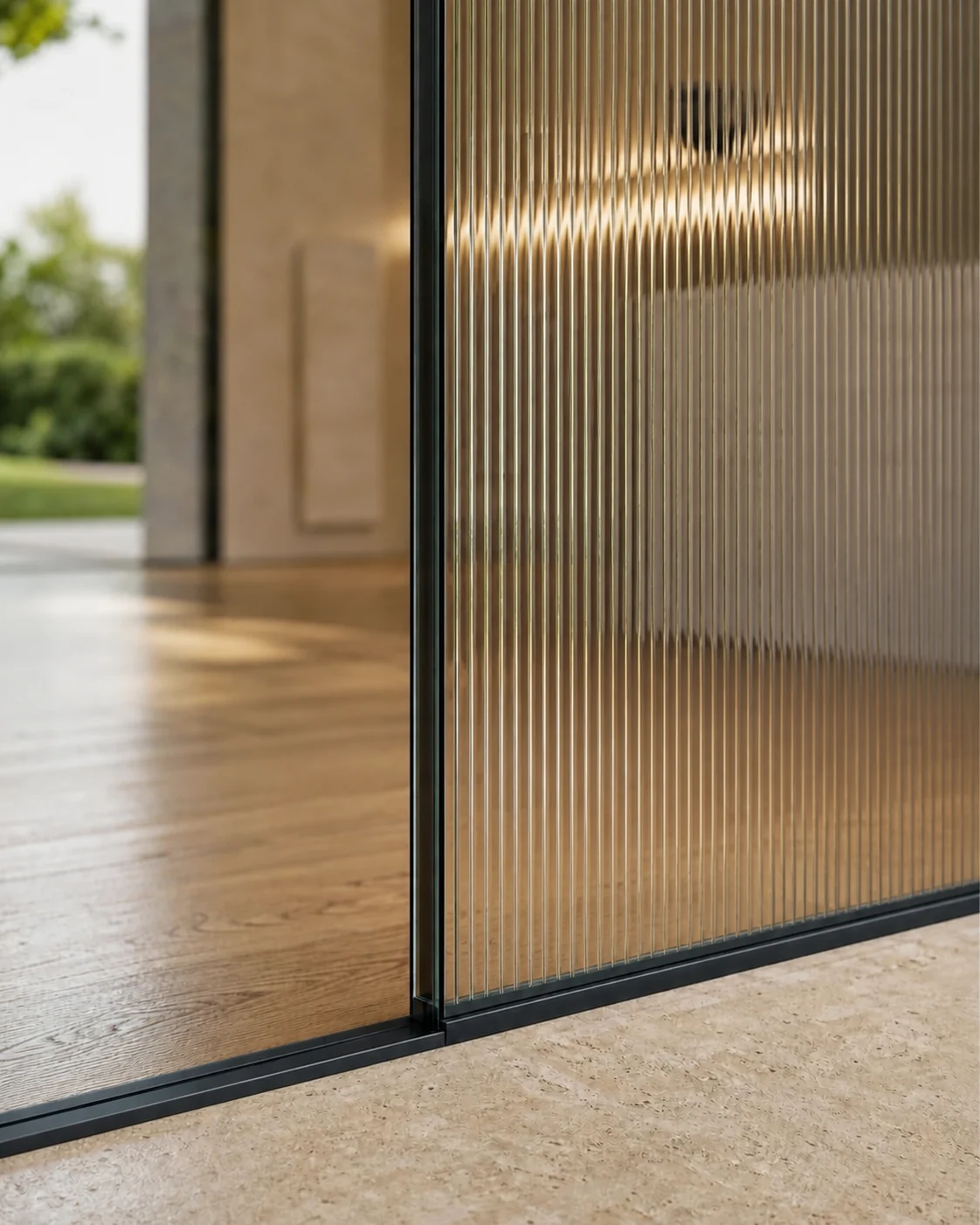
Kitchen transition
A fixed frosted or fluted glass panel between the kitchen and the rest of the home lets light pass while softening direct views. Visibility where you want it, separation where you need it.
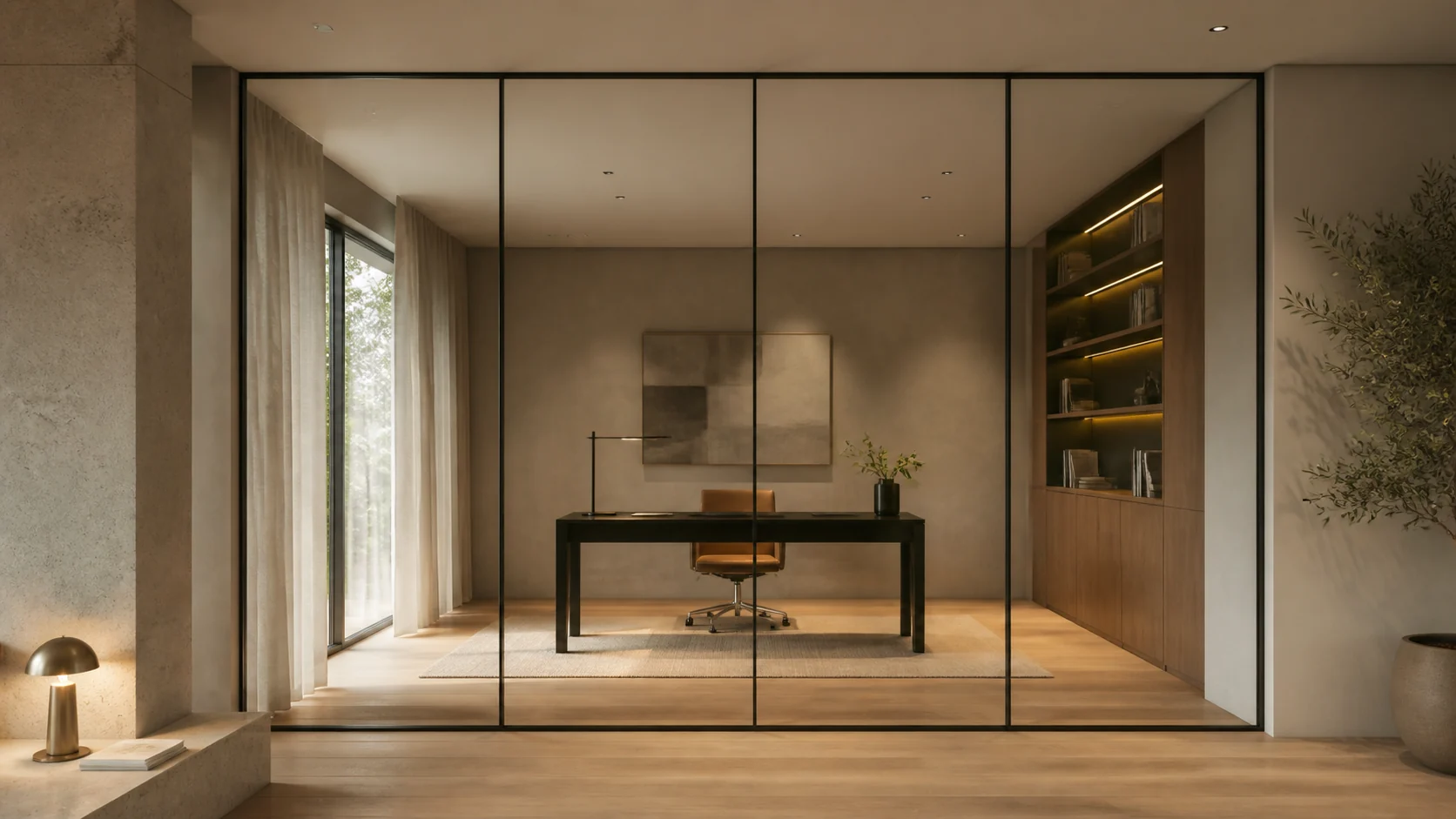
Study or home office
A full-height fixed panel turns a corner of a room into a focused work zone without making it feel like a separate room. Clear glass keeps visual openness; frosted glass adds visual privacy.
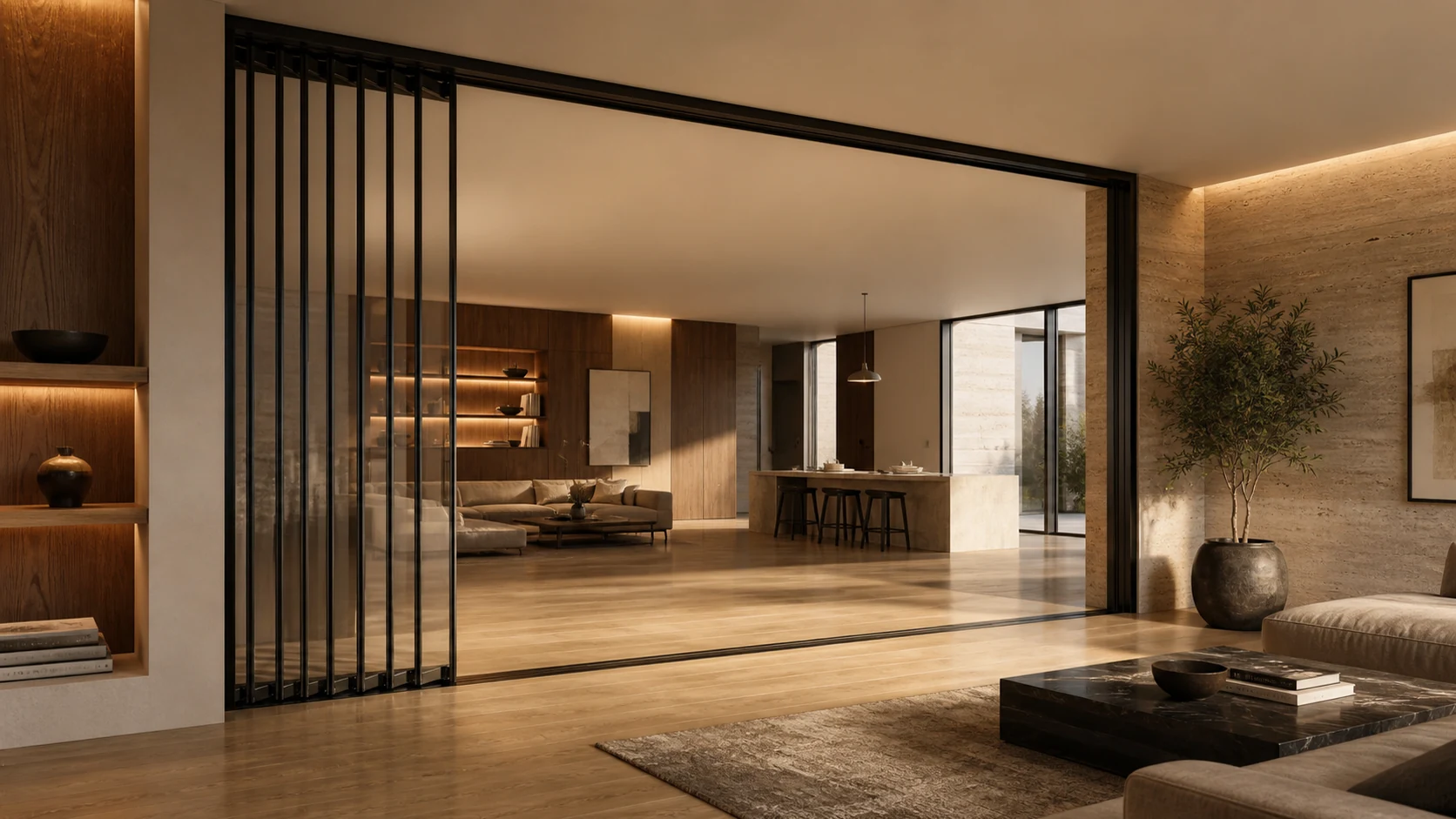
Bedroom-study or dressing zone
Separate a sleeping area from a dressing or study corner within the same room. Frosted or fabric-laminated glass provides privacy without a full wall.
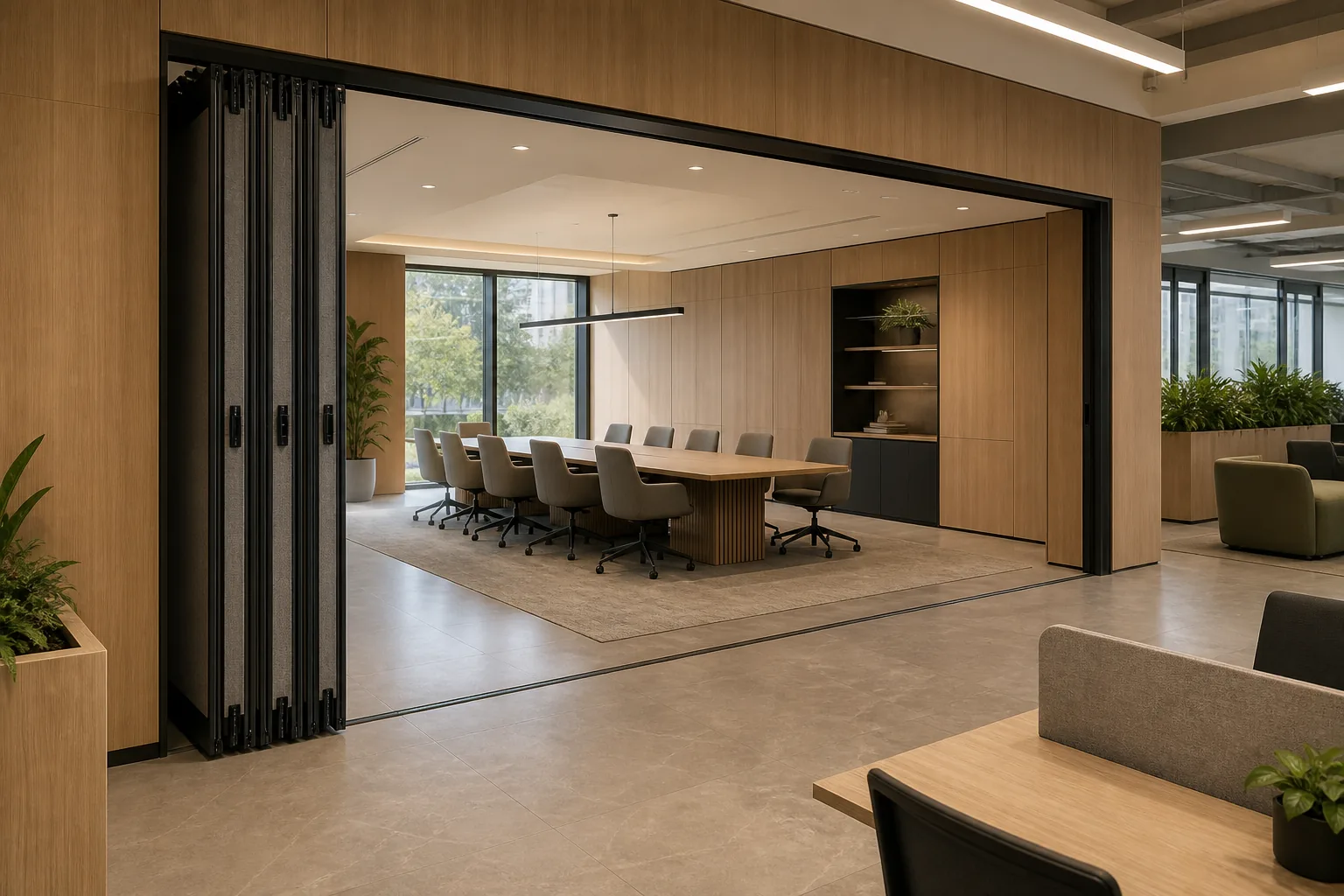
Multi-use room zoning
Where a single large room needs to serve more than one purpose, a slim folding or sliding partition creates the boundary on demand and folds away when you want the whole room back.
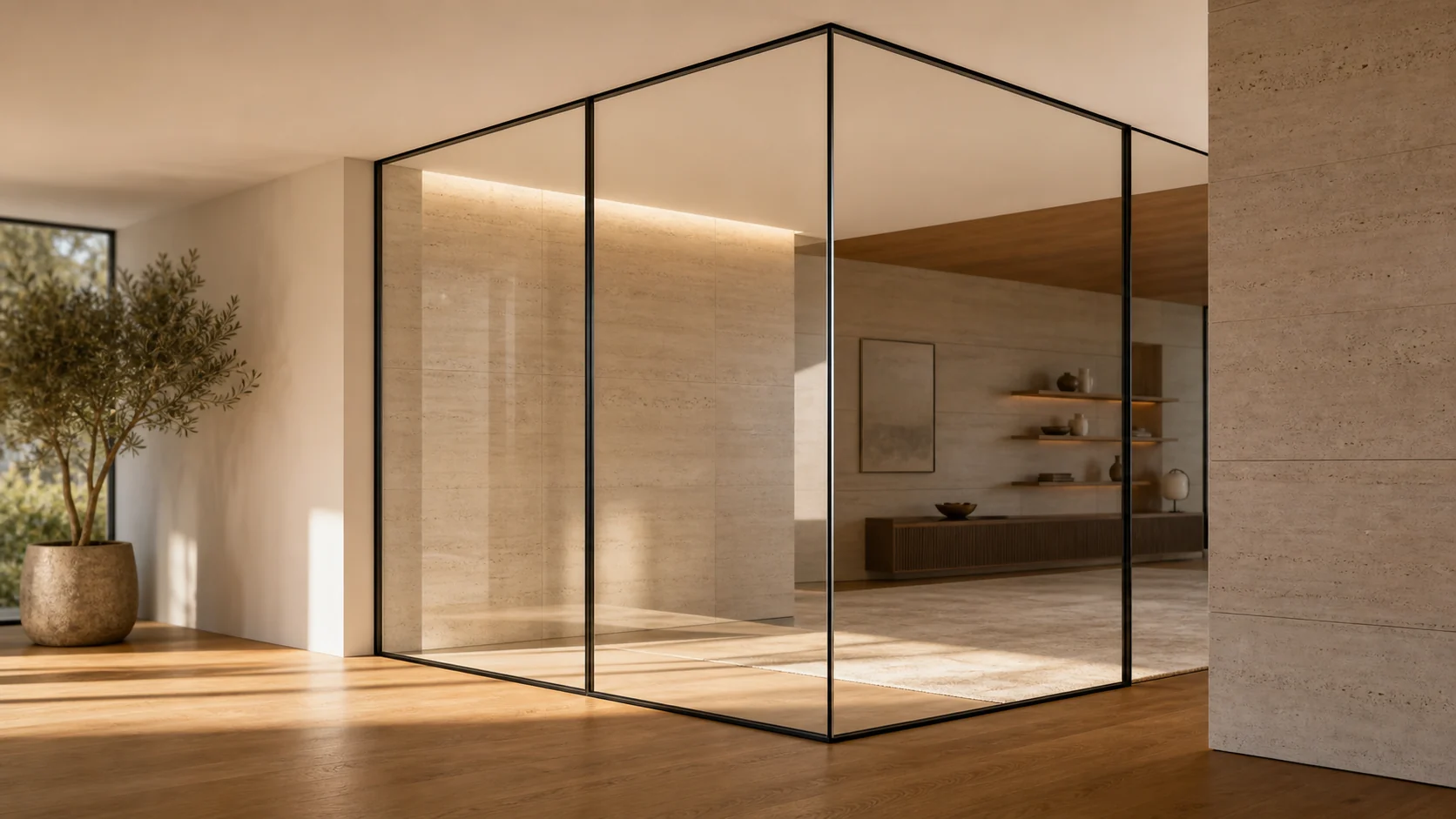
Pooja or meditation niche
A fixed clear or frosted panel frames a dedicated spiritual corner within a living space. The zone stays visually present without becoming a closed room.
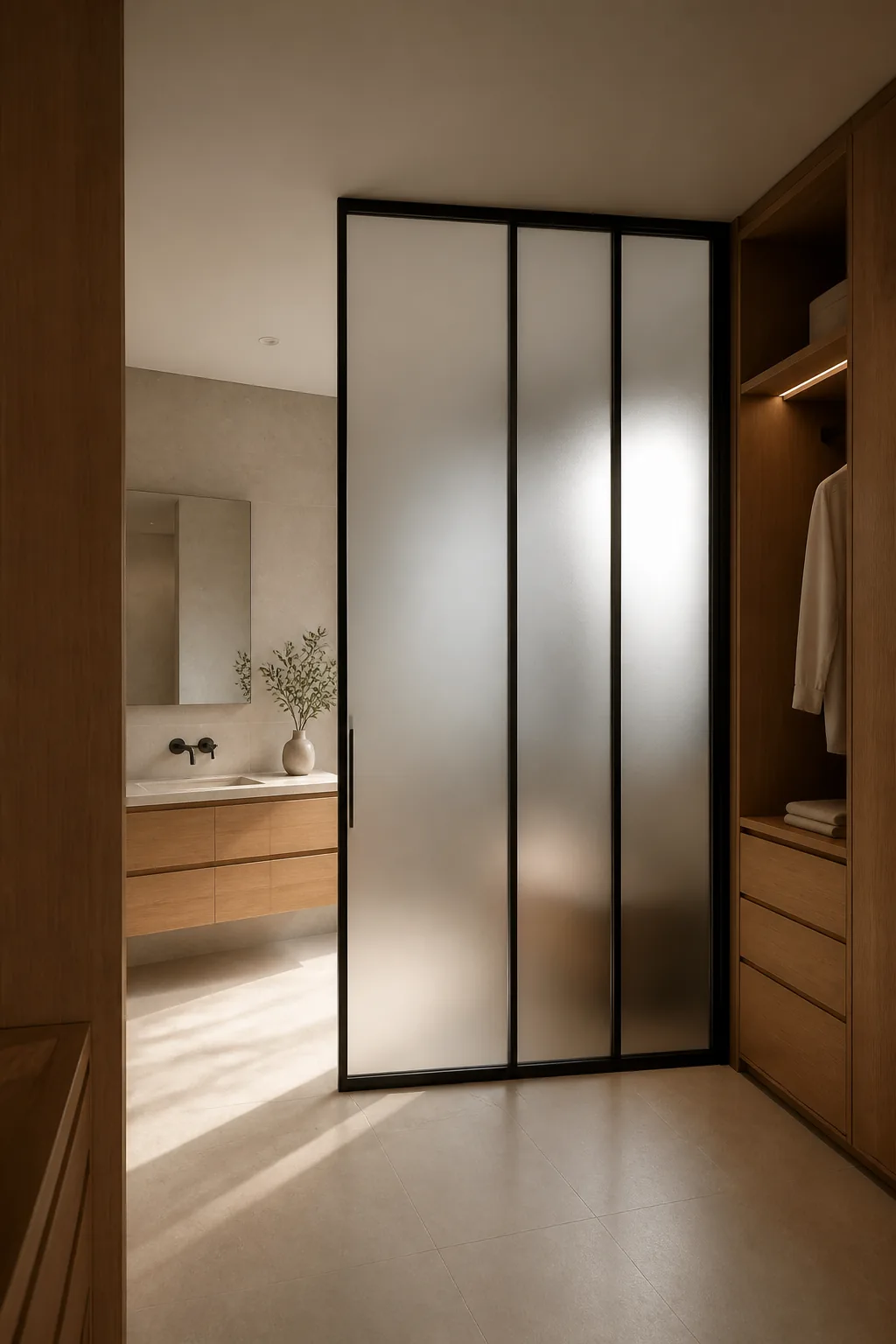
Engineered for the home that refuses a wall.
Fixed or sliding: how to choose.
The configuration affects how the room works every day. Fixed panels create permanent zones; sliding systems let the room change. The right choice depends on how you use the space.
Fixed panels
A permanent, clean zone. No track hardware visible from above. Full-height glass in one or multiple panels. Choose this when the separation is always needed and movement is not a factor.
Sliding systems
The room opens or closes depending on how you use it. Telescopic and synchronized systems clear wide openings completely. Two-Way Soft-Close moves from either end without noise. Choose this when flexibility matters.
Slide-and-fold
For the widest openings in smaller floor plans. Folds multiple panels into a compact stack. Up to 700 mm per panel, 2400 mm height, 40 kg per frame.
0kg
maximum load per sliding frame
0mm
maximum panel height
0mm
maximum sliding panel width
Choose glass by what the room needs.
The glass direction determines how much you see through the partition, how much light passes, and how private the separated zone feels.
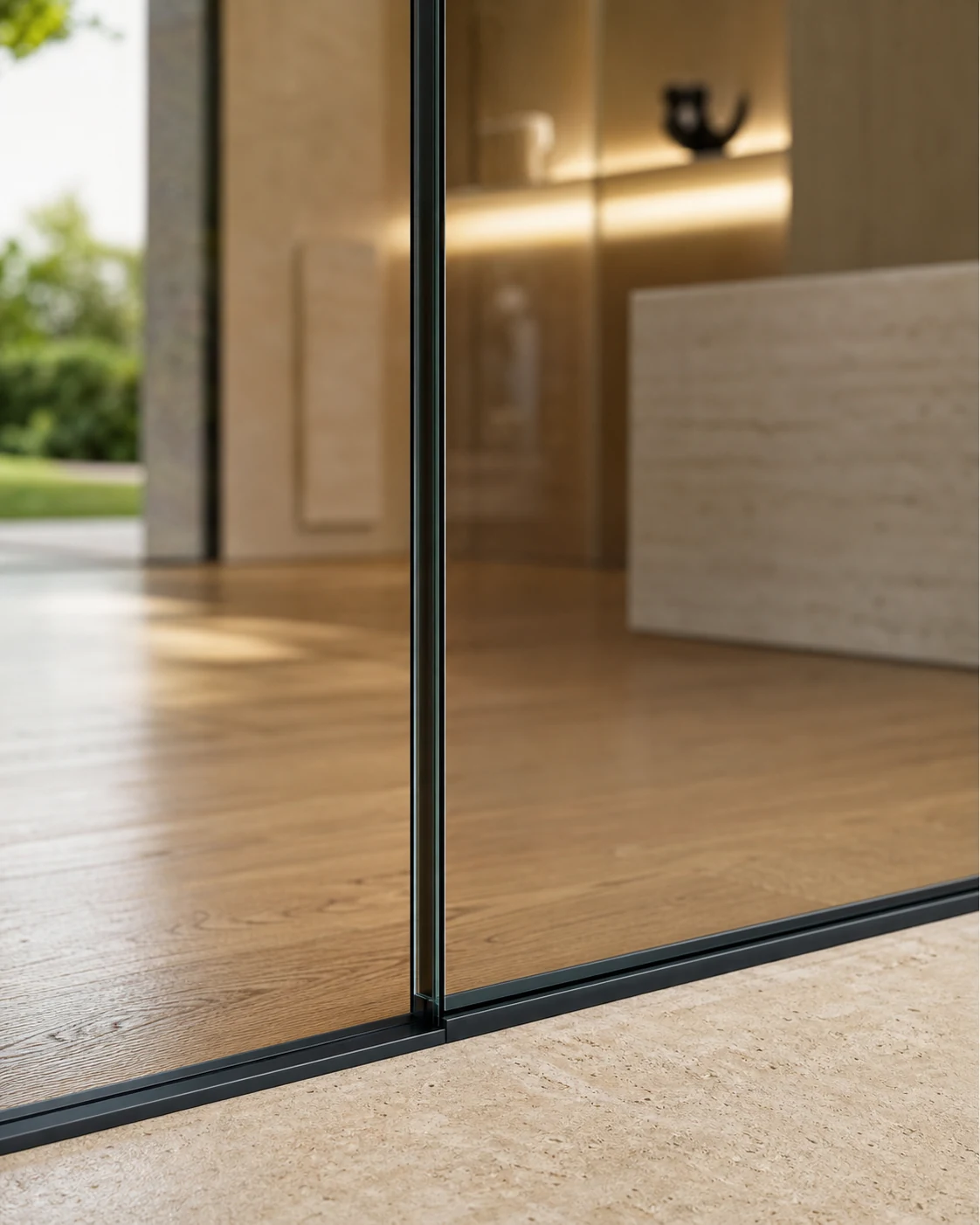
- Clear toughened (8 mm)
- When openness and light are more important than screening. Living-dining separation where both zones should feel connected.
- Fluted (8 mm)
- When you want light without a clear view. Kitchen transitions, study zones, anywhere texture adds to the interior design.
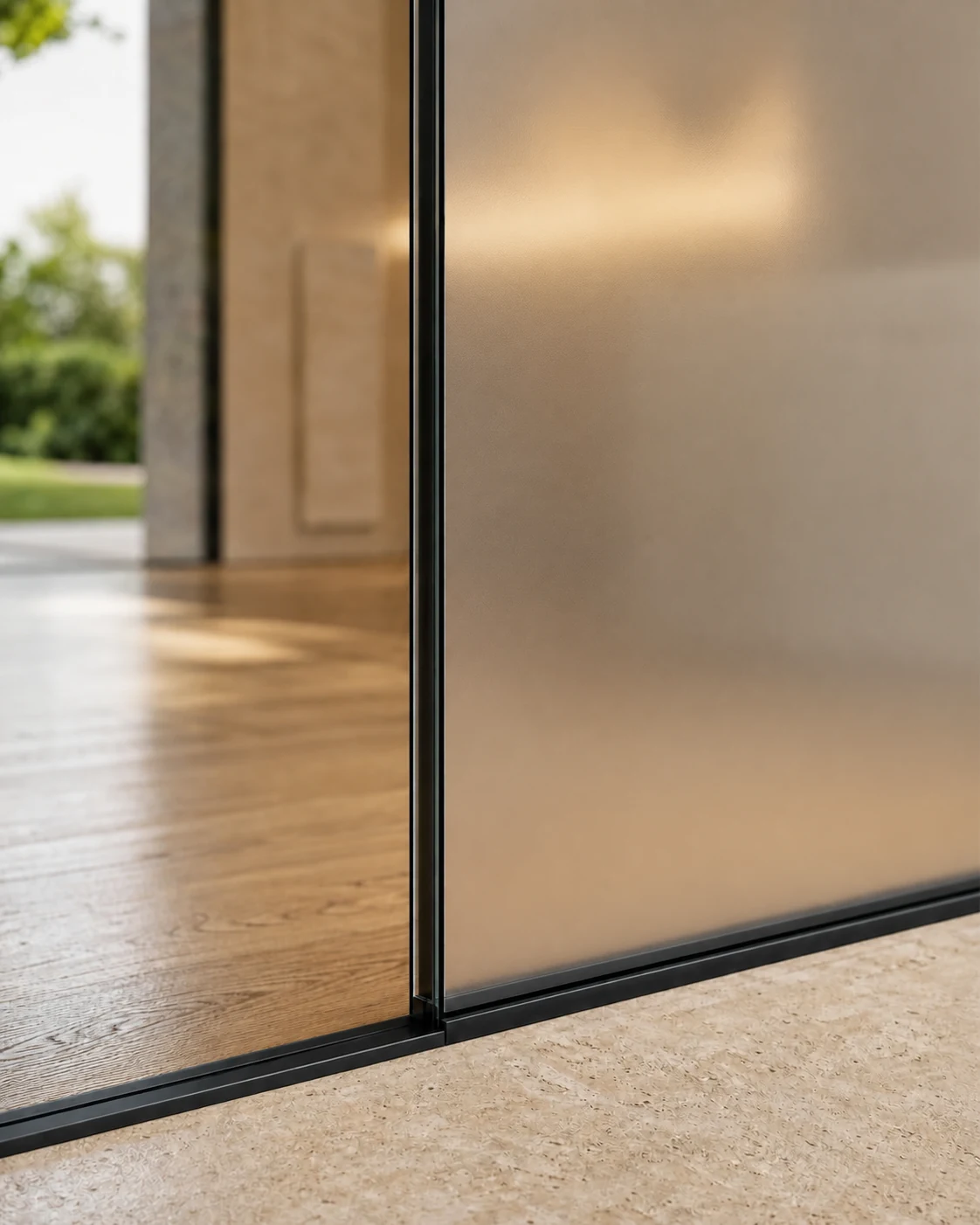
- Frosted (8 mm)
- When privacy matters more than transparency. Dressing areas, bedroom separations, home clinics.
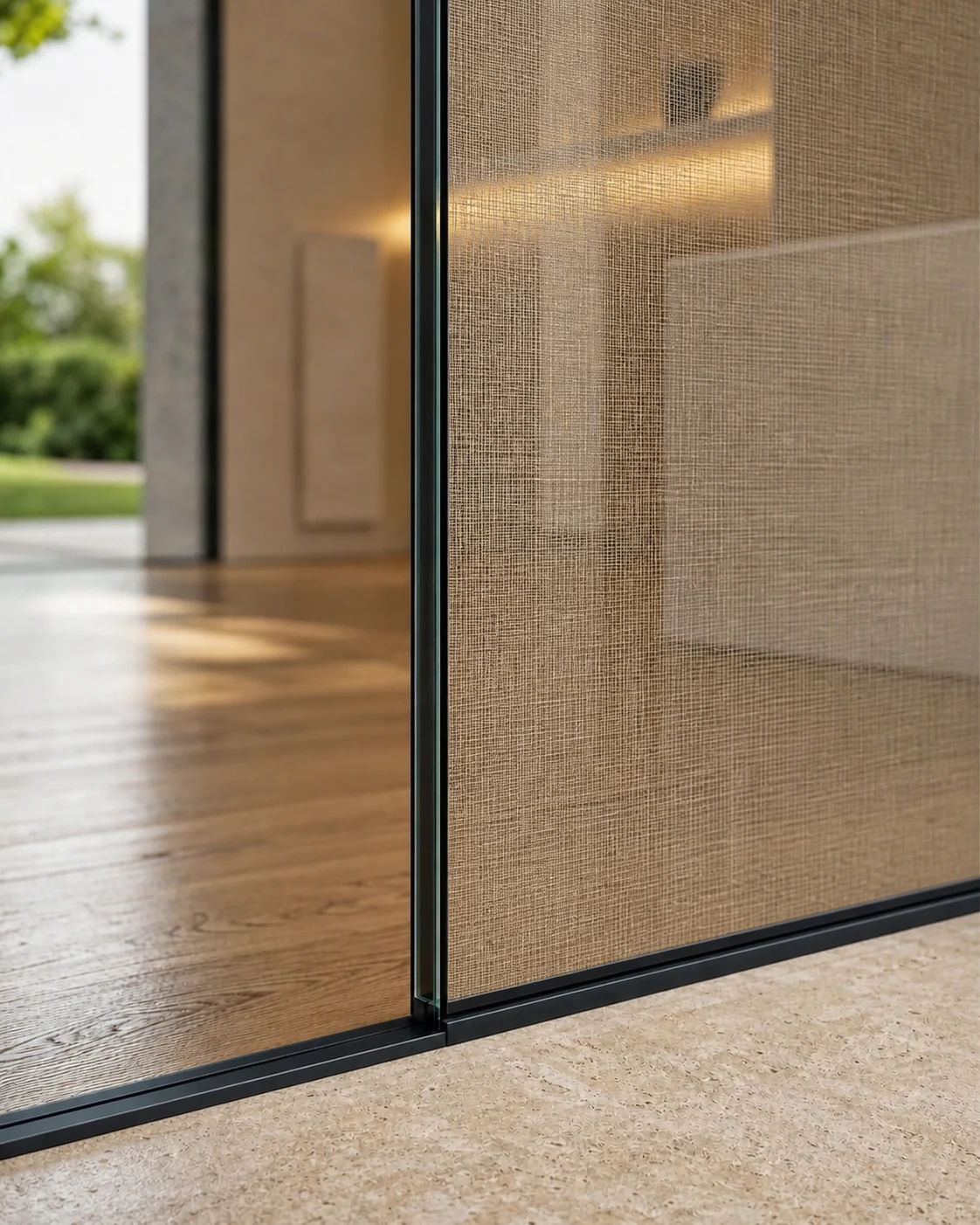
- Fabric laminated (9.52 mm)
- When a textile finish, laminated safety behaviour, and a decorative result are all needed. Considered zoning in a large residence.
Questions buyers usually ask.
They work very well in homes. Living-dining separation, kitchen transitions, home study zones, bedroom-dressing separations, and multi-use room zoning are all common residential applications. The slim sightlines preserve the open feel of a room that a standard wall would remove.
Yes, depending on the glass choice. Frosted glass provides full visual privacy while still passing light. Fluted glass gives partial screening and texture. Clear toughened glass is best where separation is more about zoning than concealment.
Fixed panels suit permanent zones: a study corner, a pooja niche, a defined dining area. Sliding systems suit rooms that need to change use: a living room that occasionally becomes a full-length space, a dining room that opens into the kitchen for a party. Slide-and-fold suits wide openings in smaller flats where the panel needs to disappear completely.
Clear toughened glass works when you want the two zones to feel connected and the light to travel through. Fluted glass is the most popular choice for living-dining separation because it adds visual texture and softens the view without fully blocking it. Frosted glass makes sense when one zone needs stronger privacy, such as a study or bedroom separation.
Major sliding systems handle up to 1200 mm wide panels at 3000 mm height, 120 kg per frame. Slide-and-fold panels go up to 700 mm wide at 2400 mm height, 40 kg per frame. Fixed slimline panels are sized to the opening. Most home openings fall comfortably within these ranges.
Black matt is the most architectural choice and reads as modern and restrained. Brushed gold or rose gold works in warmer, richer interiors. Anodised and powder-coated finishes can match a specific interior colour direction. The frame finish is a finishing decision; it does not affect the system's performance.
Share a few photos of the space, the rough opening width and height, and the room you want to separate. We will reply with a recommended system, glass, finish, and an indicative budget range. No site visit needed at first.
Send a few photos. Get a real answer.
Share photos of the room and the rough opening size. We reply with one system, one glass direction, one finish, and an indicative budget range. No obligation.
Book a Consultation
Go deeper before you enquire.
All systems in detail
Six systems, real dimensions, which configuration suits which home opening.
Glass by need
Clear, fluted, frosted, or fabric laminated. Real thicknesses and guidance.
A private zone for every room.
Start with a photo.
Share the space and rough dimensions. We will recommend the right system, glass, and finish for your home.