

Office glass
partitions.
Cabins, meeting rooms, conference rooms, and circulation zones. Ultra-slim aluminium frames, 8 and 10 mm safety glass, fixed and sliding configurations.
Where office partitions are specified.
Each use case calls for a different system, glass choice, and privacy level. Here is how the four most common applications are typically specified.
Director cabins
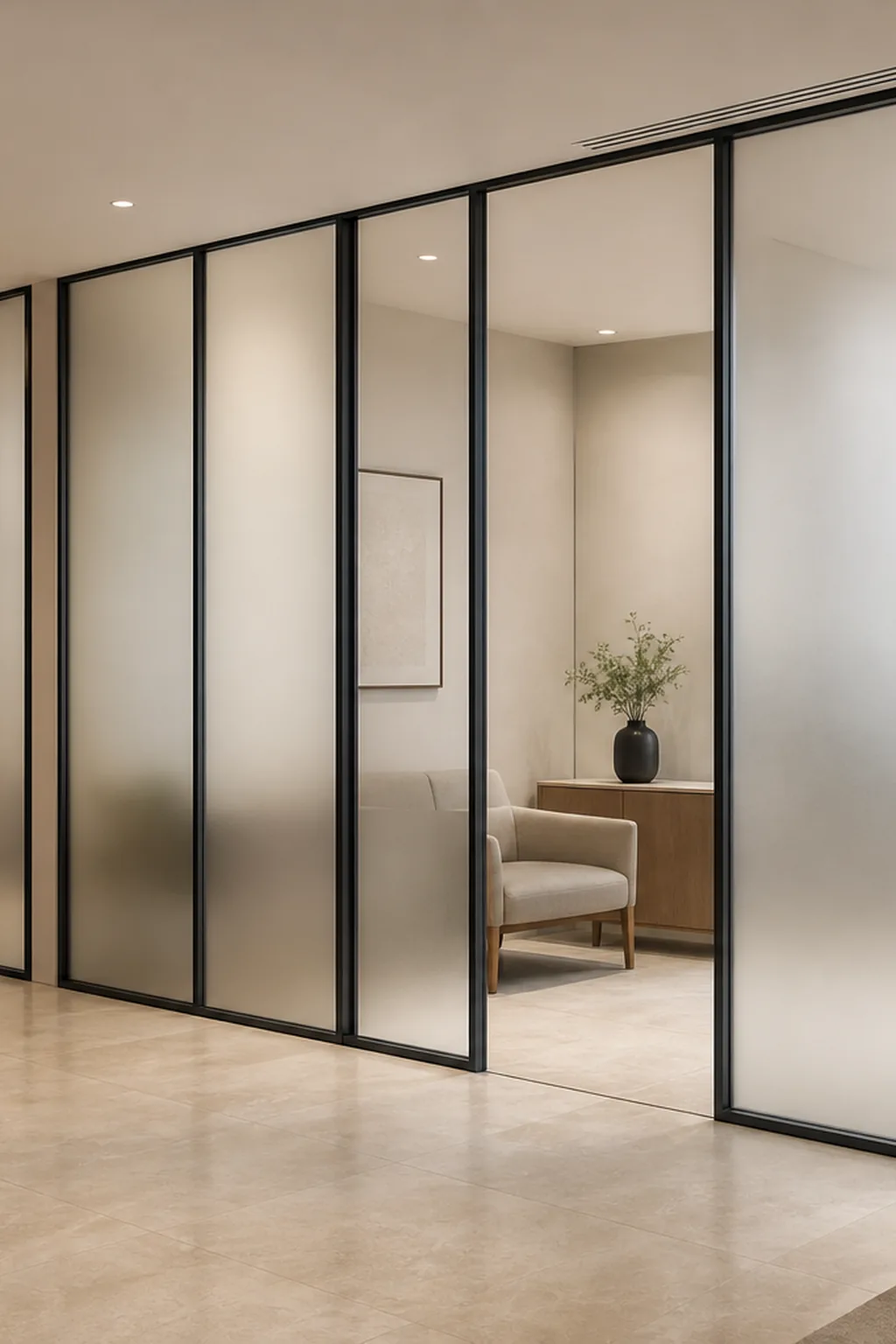
Fixed or sliding panels with frosted or fluted glass. The slim frame keeps the cabin from reading as a closed box.
Meeting rooms
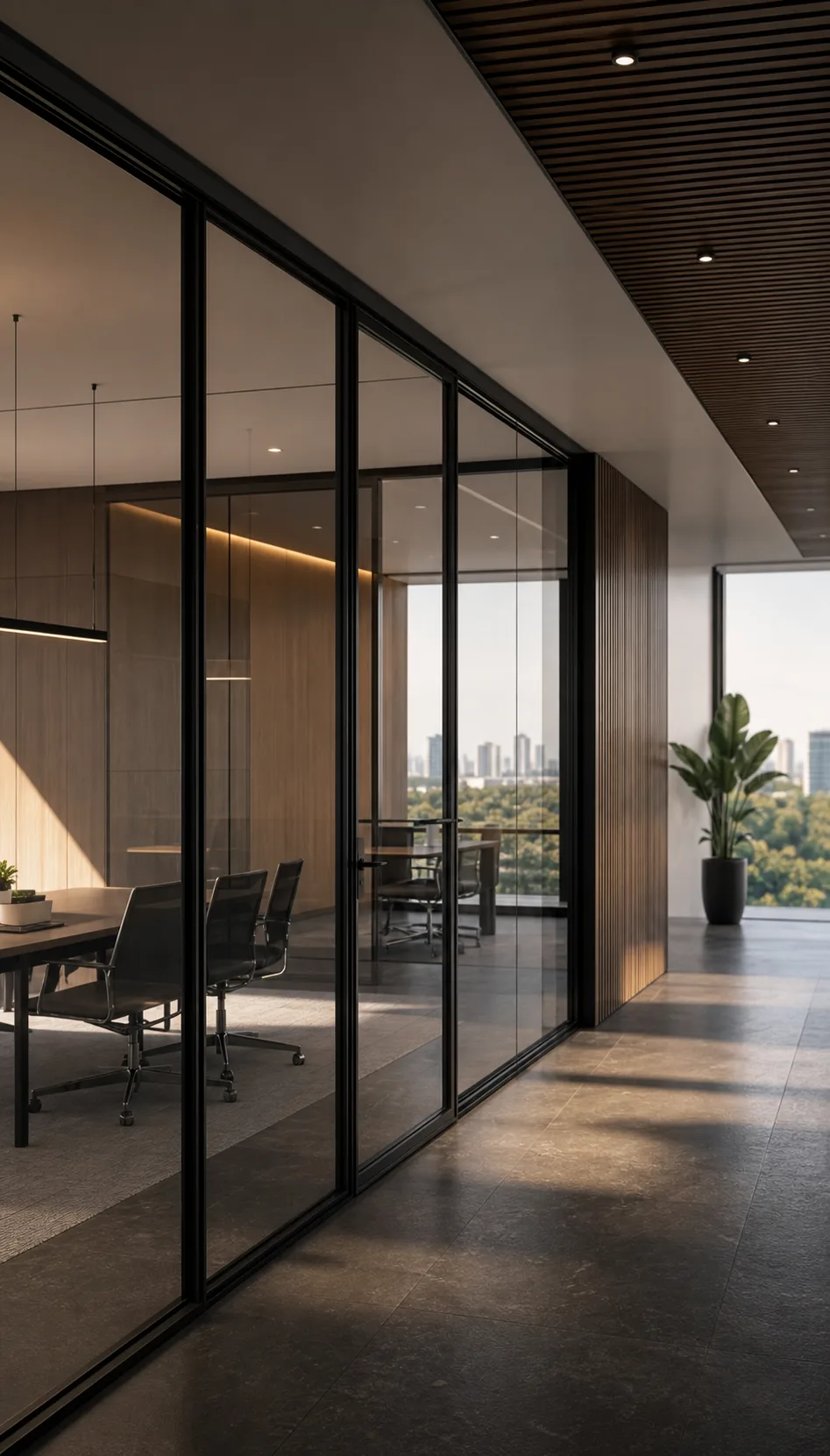
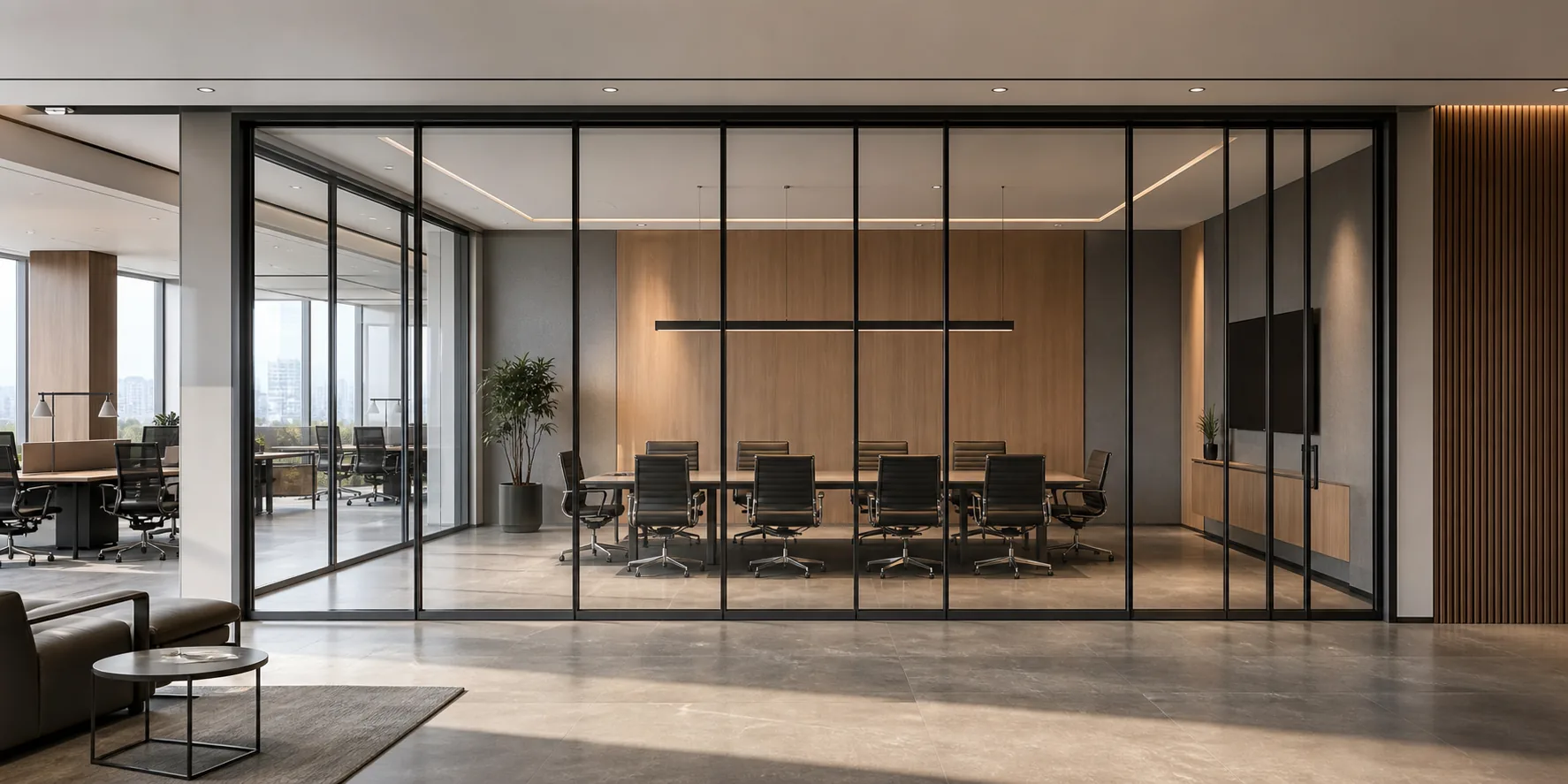
Sliding or synchronized systems that open the space when not in use. Clear or fluted glass depending on the visual privacy requirement.
Conference rooms
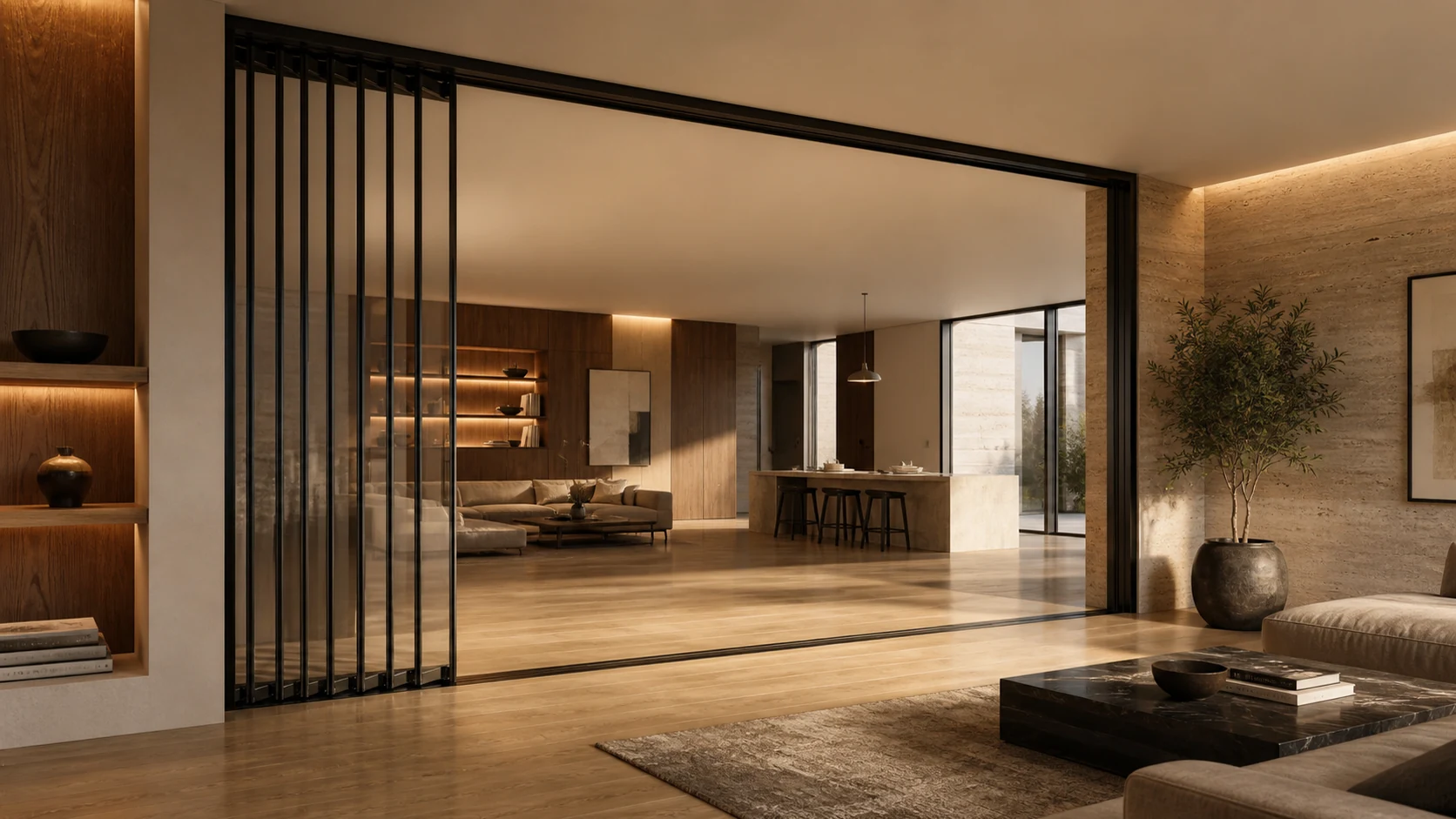
Wide-opening configurations, up to 1200 mm per panel. Synchronized sliding clears the full opening in one movement.
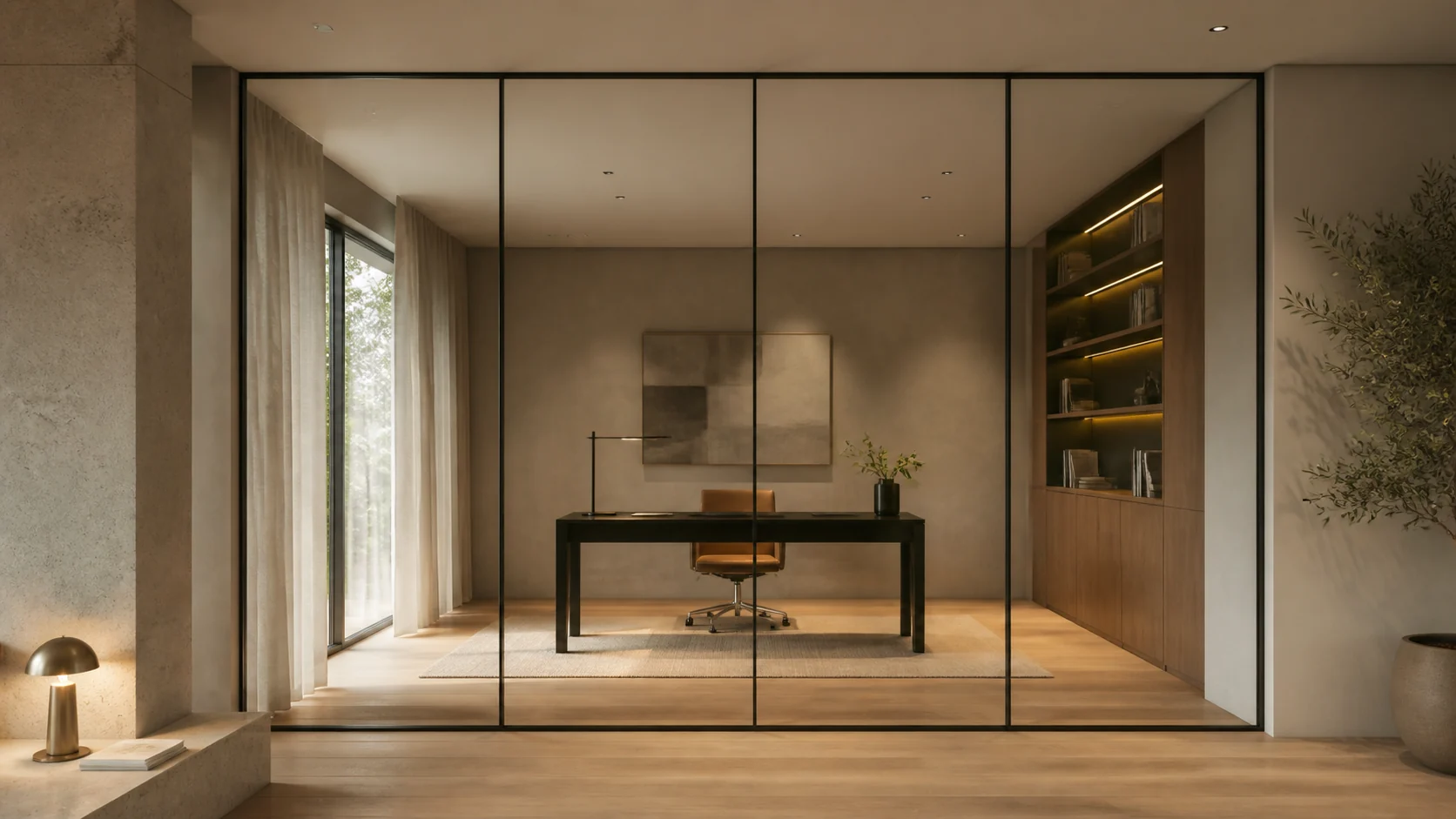
Reception and zoning
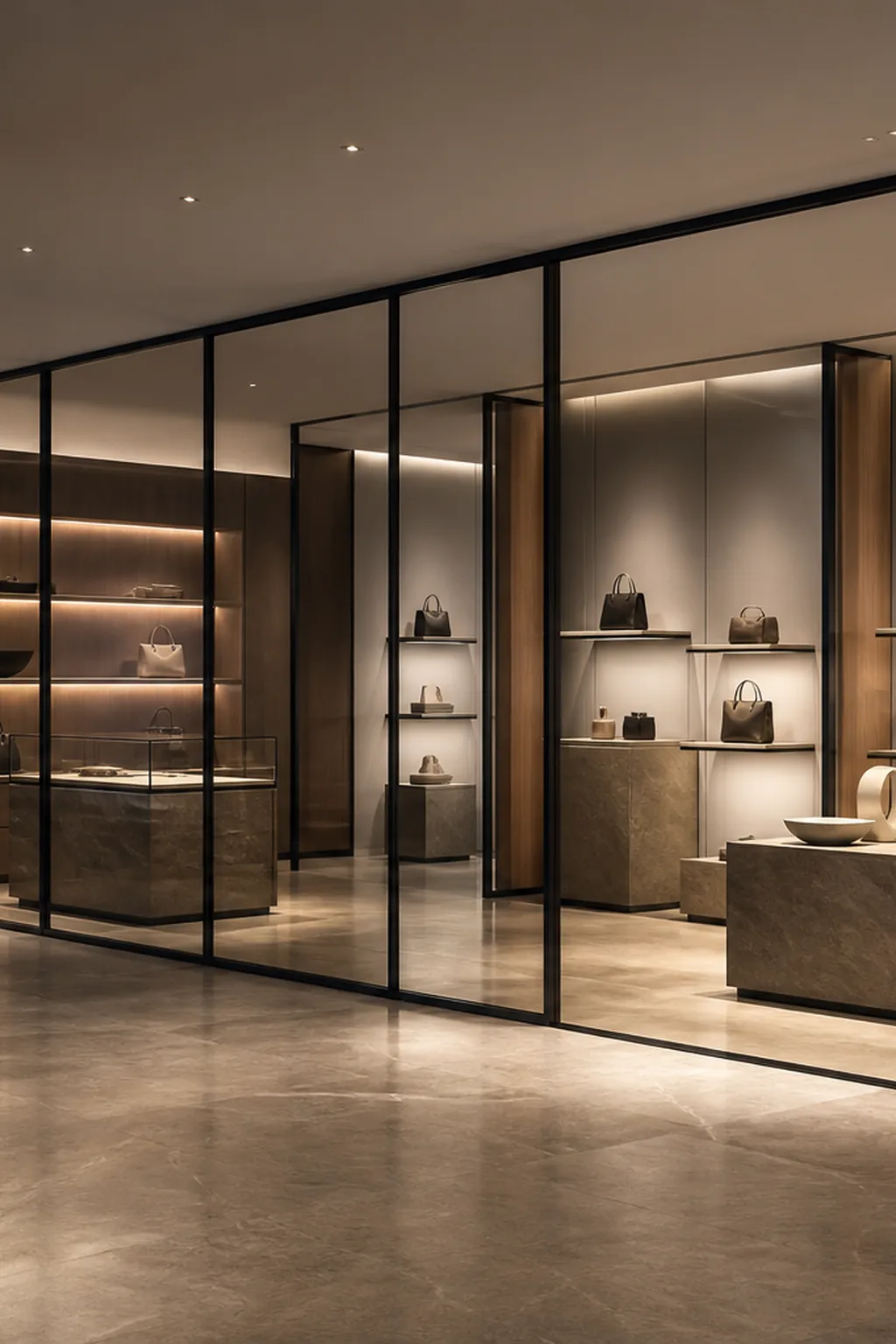
Fixed slimline panels that define circulation and front-of-house zones without blocking sightlines or light.
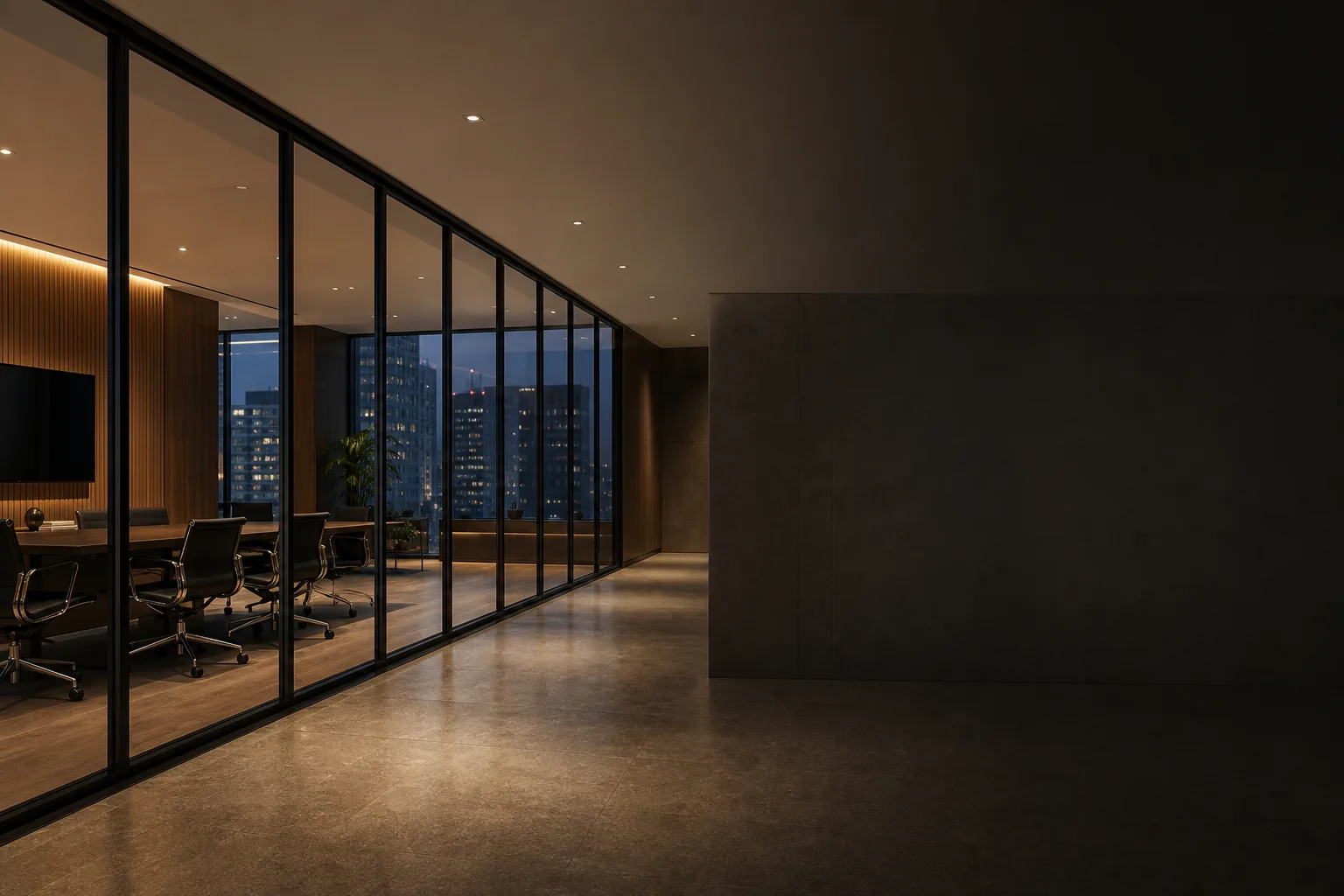
Slim frames. Open offices.
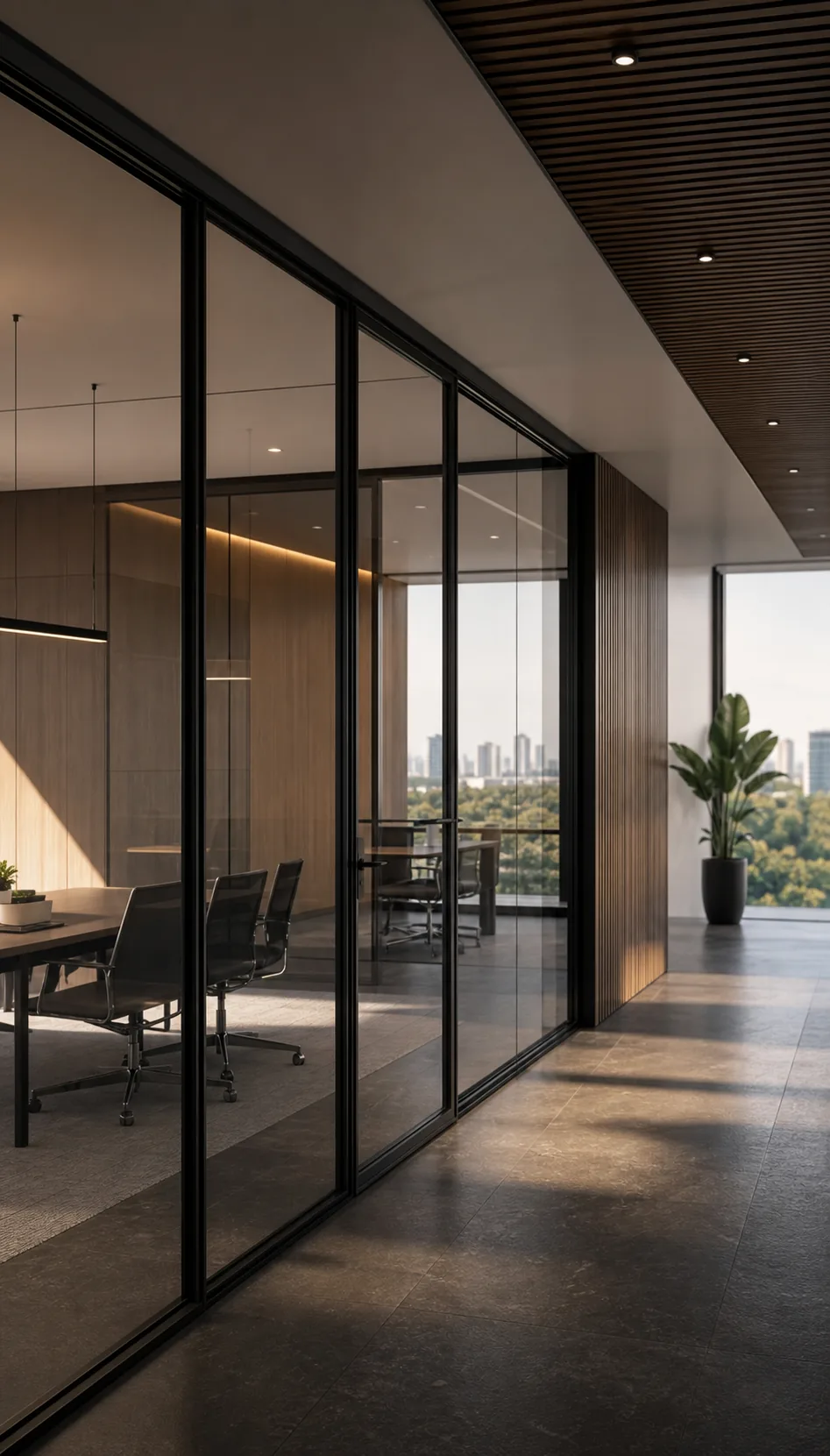
The numbers behind slim profile.
0kg
Maximum load per frame on sliding systems
0mm
Maximum panel height on sliding systems
0mm
Standard safety glass thickness
Privacy choices for office glass.
The glass determines how much the space reads as open and how much it screens. We recommend based on room type and how the space is used.
When the space should read as one room. Teams, open-plan adjacencies, or front-of-house.
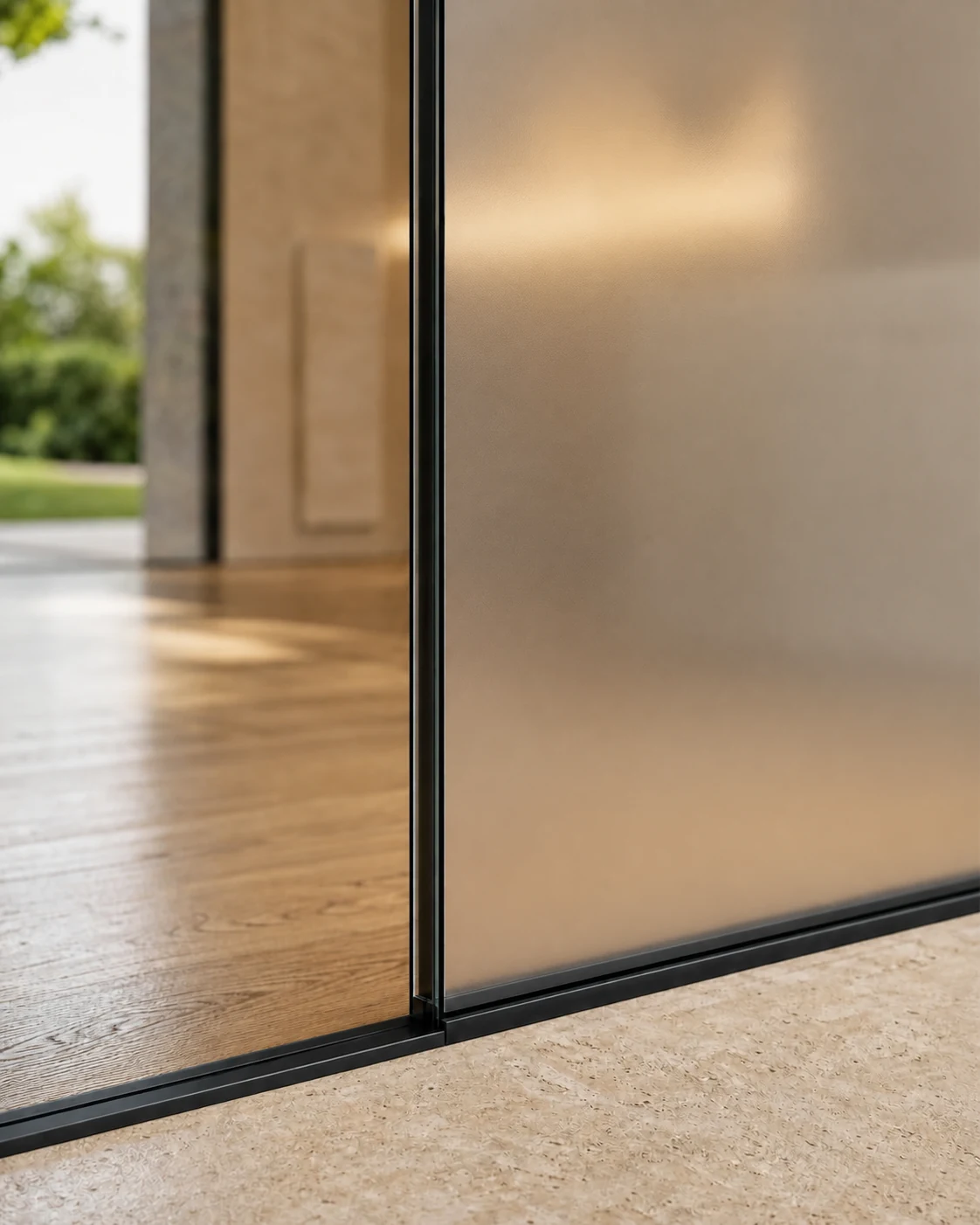
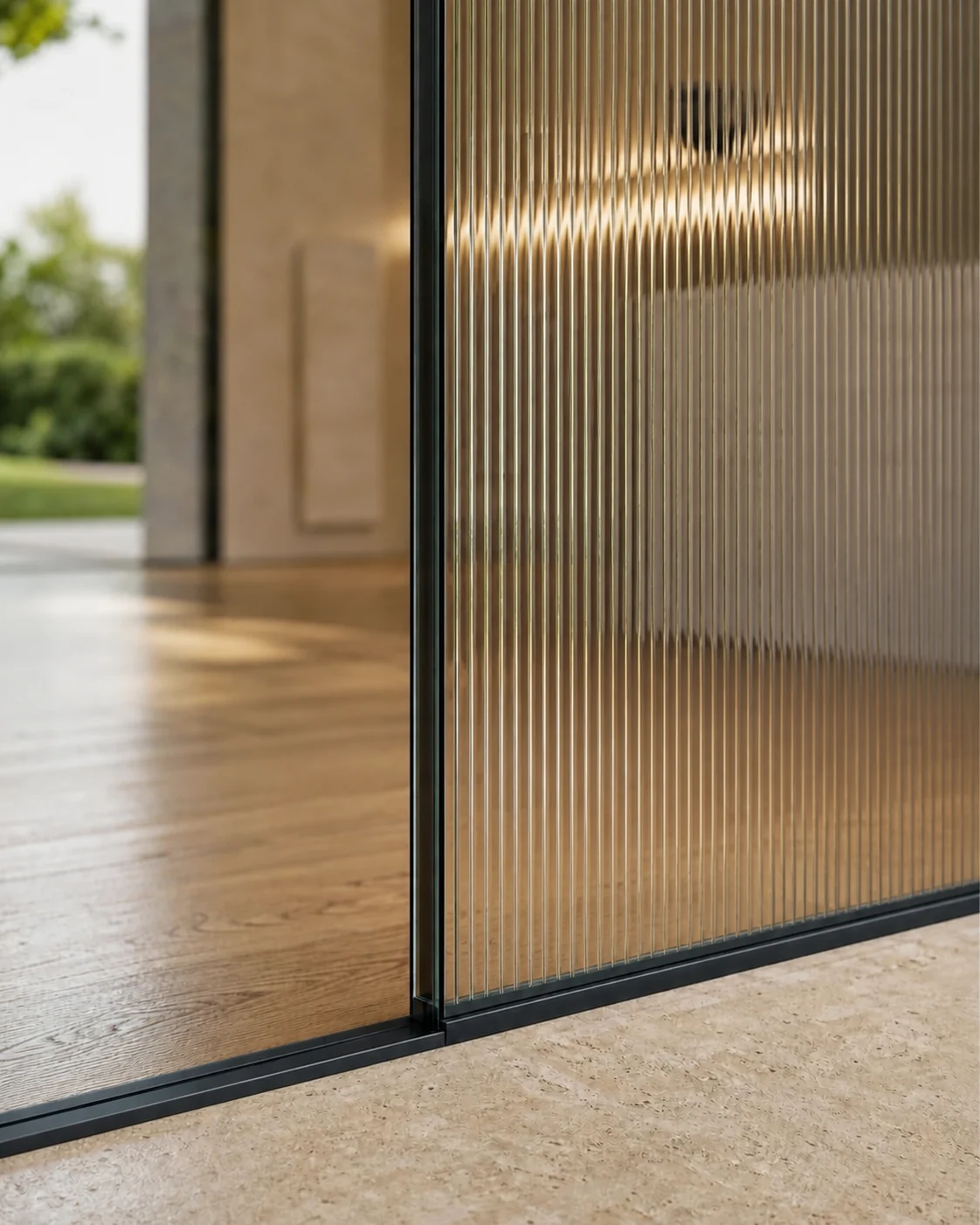
Softer privacy. Light passes, detail does not. Useful for cabins where full frosting feels too enclosed.
Strong visual privacy. Director cabins, HR rooms, private meeting rooms. Soft diffused light.
Decorative privacy with a textile finish and laminated safety behaviour.
Slim sightlines. The room stays one room.
Fixed or sliding: how to decide.
Fixed panels suit permanent separation: director cabins, private offices, zoning walls that will not be moved. The profile is the same as a sliding system; the frame sits fixed into the floor and ceiling.
Sliding systems suit rooms that need to open occasionally: meeting rooms that combine into a boardroom, conference rooms that become event spaces. Sliding panels on a soft-close track carry up to 120 kg per frame and run on a single ceiling rail.
Synchronized sliding moves every panel in one action, useful for wide conference rooms. Telescopic sliding stacks panels at one end when open.
Privacy expectations, answered honestly.
Glass partitions are specified by the level of visual separation the room needs. The final result depends on five things:
We specify the privacy direction before recommending a system, not after. Share the room use and desired visibility level when you get in touch.
The systems behind office partitions.
Each of the four core office systems is engineered for a different opening type and usage pattern. The same slim profile runs across all four.
Common questions about office glass partitions.
Privacy depends on glass type, layout, door style, frame junction details, and installation precision. Clear glass keeps the office visually connected. Fluted glass softens the view. Frosted glass provides the strongest visual screen for cabins and meeting rooms. We recommend specifying the privacy requirement first so the system is chosen around it, not after.
Frosted glass gives the strongest visual screen while still transmitting natural light. Fluted glass gives softer, texture-led privacy where complete opacity is not required. Fabric laminated glass adds decorative and light-diffusion properties. For director cabins or private meeting rooms, frosted or double-frosted is usually the right direction.
Yes. Our systems are engineered to support integrated door panels, including sliding and soft-close configurations. Door hardware is rated to 120 kg per frame on the sliding systems. The door style, whether single sliding, double sliding, or hinged, is confirmed at the drawing stage.
Our sliding systems support panels up to 3000 mm tall and 1200 mm wide at 120 kg per frame. Fixed panels can be specified taller subject to structural conditions. Slide-and-fold systems go up to 2400 mm. Heights are confirmed after site measurement.
Fixed panels suit permanent cabin or zoning separation where the wall does not need to open. Sliding systems suit meeting and conference rooms where the partition is occasionally moved to open the space. Synchronized sliding is useful when a wide opening needs every panel to move together in one action. The choice depends on how frequently the space needs to change.
After site measurement and drawing approval, most standard office projects are completed within 25-30 days. Complex multi-room layouts or large-span projects are planned on a project-specific schedule shared at quote stage.
The visual difference is significant. Standard aluminium partitions use wider extruded frames that are visible and dominant. Slim profile systems use narrow extruded aluminium with the glass as the primary visual element. The result is a lighter, more architectural appearance that reads as glass rather than aluminium.
Black matt, brushed gold, rose gold, anodised, and powder-coated. Black matt is the most common office choice for its clean, architectural quality. Anodised and powder-coated options allow project-specific colour matching.
Book an Office Visit
See the systems, finishes, and privacy options before the project is quoted.
Book an office visit.
Share the office use case, preferred slot, and what you want to compare. The team can prepare the right systems, glass samples, and finish direction before you arrive.
Need the product reference first? Download the brochure or Request a Quote