


Resource
Glass Partition Cost: What Actually Affects the Price
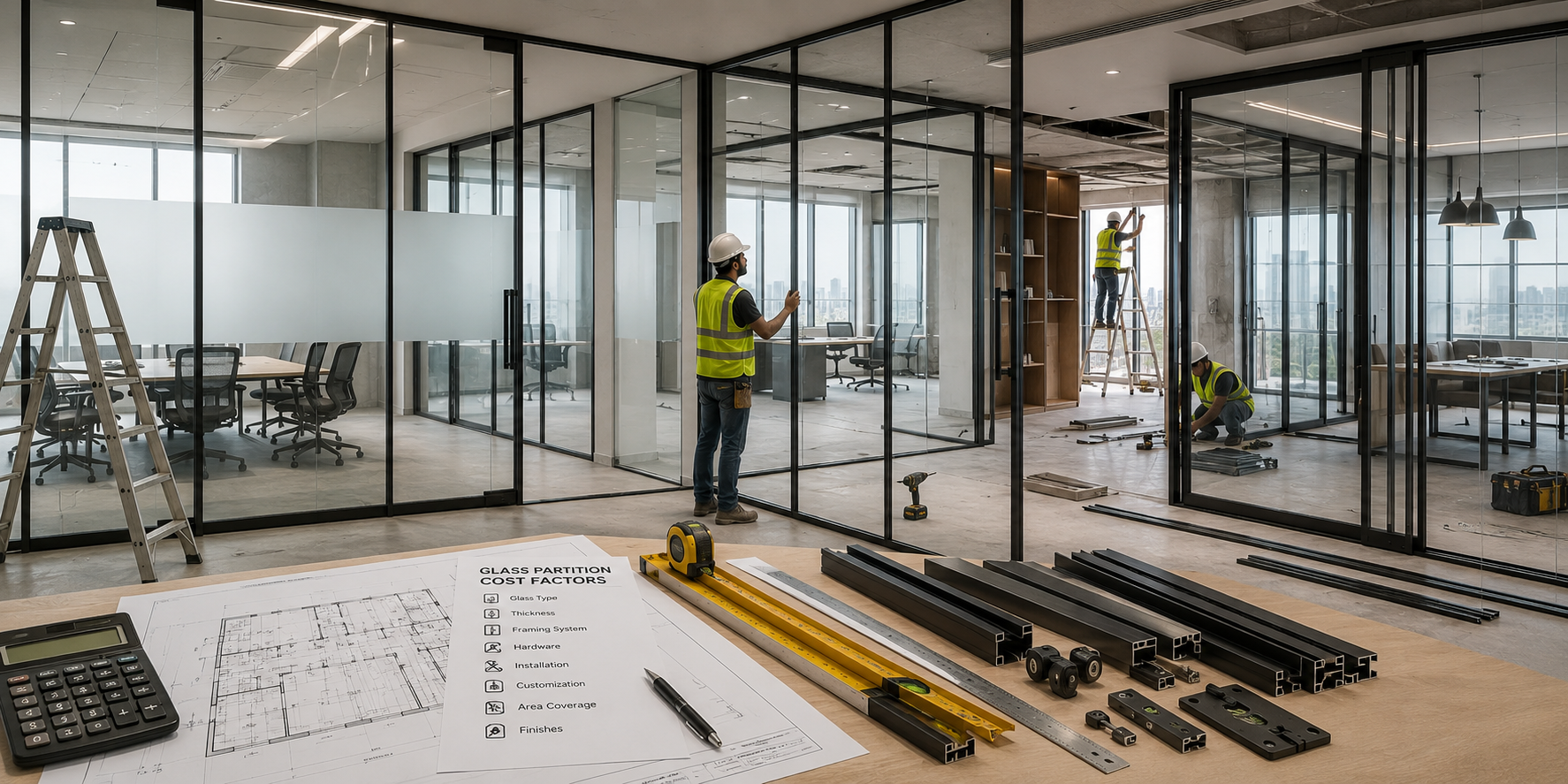
Understand what really affects glass partition costs. Learn how glass type, thickness, hardware, opening size, installation complexity, and site conditions influence pricing so you can request accurate quotations without relying on misleading per-square-foot rates.
Be-Slim Team
When planning a glass partition project, one of the first questions people ask is, "What is the cost per square foot?" While this seems like a straightforward way to estimate a budget, it rarely reflects the actual project cost. Glass partition pricing depends on multiple factors, including the type of glass, thickness, hardware, partition configuration, installation complexity, and site conditions.
Instead of relying on generic rates, understanding what drives the final quotation helps you compare proposals more accurately and avoid unexpected costs during installation.
This guide explains the key factors that influence office glass partition price and what information you should prepare before requesting a quotation.
Why Published Per Square Foot Rates Are Often Misleading
Many websites advertise flat per-square-foot prices for glass partitions. In reality, two projects with the same area can have completely different costs because the specification and installation requirements vary significantly.
For example, a fixed clear glass partition with basic hardware costs differently from a sliding partition with premium fittings, laminated glass, and acoustic seals. Even the height of the partition and the number of doors influence material quantities and labour.
Factors Missing from Flat Rates
- Glass specification.
- Partition height.
- Door type.
- Hardware quality.
- Site accessibility.
- Installation complexity.
Always compare quotations based on the complete specification rather than only the area.
How Glass Type Changes the Overall Cost
The finish and processing applied to the glass have a direct impact on project pricing. Clear toughened glass generally serves as the baseline, while decorative and specialty finishes require additional manufacturing processes.
| Glass Type | Typical Cost Impact | Best Application |
|---|---|---|
| Clear Glass | Baseline | Open offices |
| Frosted Glass | Moderately Higher | Meeting rooms |
| Fluted Glass | Premium | Executive cabins |
| Laminated Glass | Higher | Acoustic spaces |
| Smart Glass | Highest | Luxury boardrooms |
Choose the glass type based on functionality rather than appearance alone.
Glass Thickness: When Is 10mm Enough?
Glass thickness affects strength, stability, and overall cost. The most common office partition specifications use 10mm or 12mm toughened safety glass.
| Thickness | Recommended Use | Cost Impact |
|---|---|---|
| 10mm | General office partitions | Standard |
| 12mm | Taller partitions and premium spaces | Higher |
Many buyers search for the 12mm toughened glass partition price, but thicker glass is only necessary where structural requirements or design intent justify the additional investment.
Fixed vs Sliding Partitions
The partition configuration has a major influence on the total budget. Fixed partitions require fewer moving components, while sliding systems include tracks, rollers, and precision hardware.
| Feature | Fixed | Sliding |
|---|---|---|
| Hardware | Minimal | Premium Track System |
| Installation | Simpler | More Complex |
| Maintenance | Lower | Moderate |
| Overall Cost | Generally Lower | Generally Higher |
Sliding systems provide greater flexibility but typically require a larger investment because of additional hardware and installation precision.
Opening Size and Partition Height Matter
Large openings and taller partitions require more glass, stronger profiles, and additional labour during installation. As partition height increases, structural considerations become more important.
Cost Influencers
- Floor-to-ceiling height.
- Number of glass panels.
- Door openings.
- Profile length.
- Handling larger glass panels.
Projects with oversized panels often require specialized lifting equipment and additional installation planning.
Hardware Quality Makes a Significant Difference
Hardware is one of the biggest variables in any glass partition price guide. Handles, locks, hinges, floor springs, and sliding mechanisms vary considerably in quality and durability.
| Hardware Component | Budget Option | Premium Option |
|---|---|---|
| Handles | Standard Finish | Designer Stainless Steel |
| Locks | Basic | High Security |
| Sliding Rollers | Standard | Heavy-Duty Soft Close |
| Hinges | Standard | Premium Hydraulic |
Quality hardware improves durability and reduces long-term maintenance.
Site Conditions Influence Installation Costs
Installation costs depend not only on materials but also on the conditions at the project site.
Common factors include:
- Upper-floor installations.
- Limited lift access.
- Narrow staircases.
- Occupied office environments.
- Uneven floors or ceilings.
- After-hours installation requirements.
Projects with difficult access generally require additional labour and installation time.
Preparing for an Accurate Quotation
Providing complete project information allows suppliers to prepare a more accurate estimate.
- Floor plan.
- Site dimensions.
- Partition height.
- Preferred glass type.
- Door locations.
- Sliding or fixed preference.
- Hardware expectations.
- Project location.
- Expected installation timeline.
Common Mistakes That Increase Project Costs
- Requesting quotations without drawings.
- Changing specifications after fabrication begins.
- Selecting premium hardware without considering budget.
- Ignoring site access limitations.
- Comparing quotations based only on price.
Quick Cost Comparison
| Factor | Influence on Cost |
|---|---|
| Glass Type | High |
| Glass Thickness | Moderate |
| Sliding System | High |
| Hardware Quality | High |
| Partition Height | Moderate |
| Site Conditions | Moderate to High |
Conclusion
There is no universal glass partition cost per square foot because every project has unique design, material, and installation requirements. Glass type, thickness, partition configuration, hardware, project size, and site conditions all contribute to the final quotation.
Rather than focusing on a single price figure, compare quotations based on complete specifications and quality standards. A well-planned project not only delivers better value but also ensures your glass partition system performs reliably for years to come.
Common questions
The glass is the biggest variable: frosted, fluted and laminated is dearer than clear. 12mm glass is 15 to 25% more expensive than 10mm. Sliding systems are more because of the track and fittings. High-quality handles and locks cost more. Larger panels require thicker glass and heavier sections. Difficult access impacts labor time as well.
Yes. You can give a budget scope based on your description: type of room, size, glass needed, fixed or sliding. For a set quote needs a site survey. Things vary from rough and sites make a difference. That makes a rough figure a fixed one.
Projects of any size, from a single study division to a whole office. It is highly unlikely that very small projects such as a single small plank would entail significant cost because of the inability to deliver the service, transportation, installation, and so on. Call and specify your project, and you will receive an adequate response as to whether it applies.