
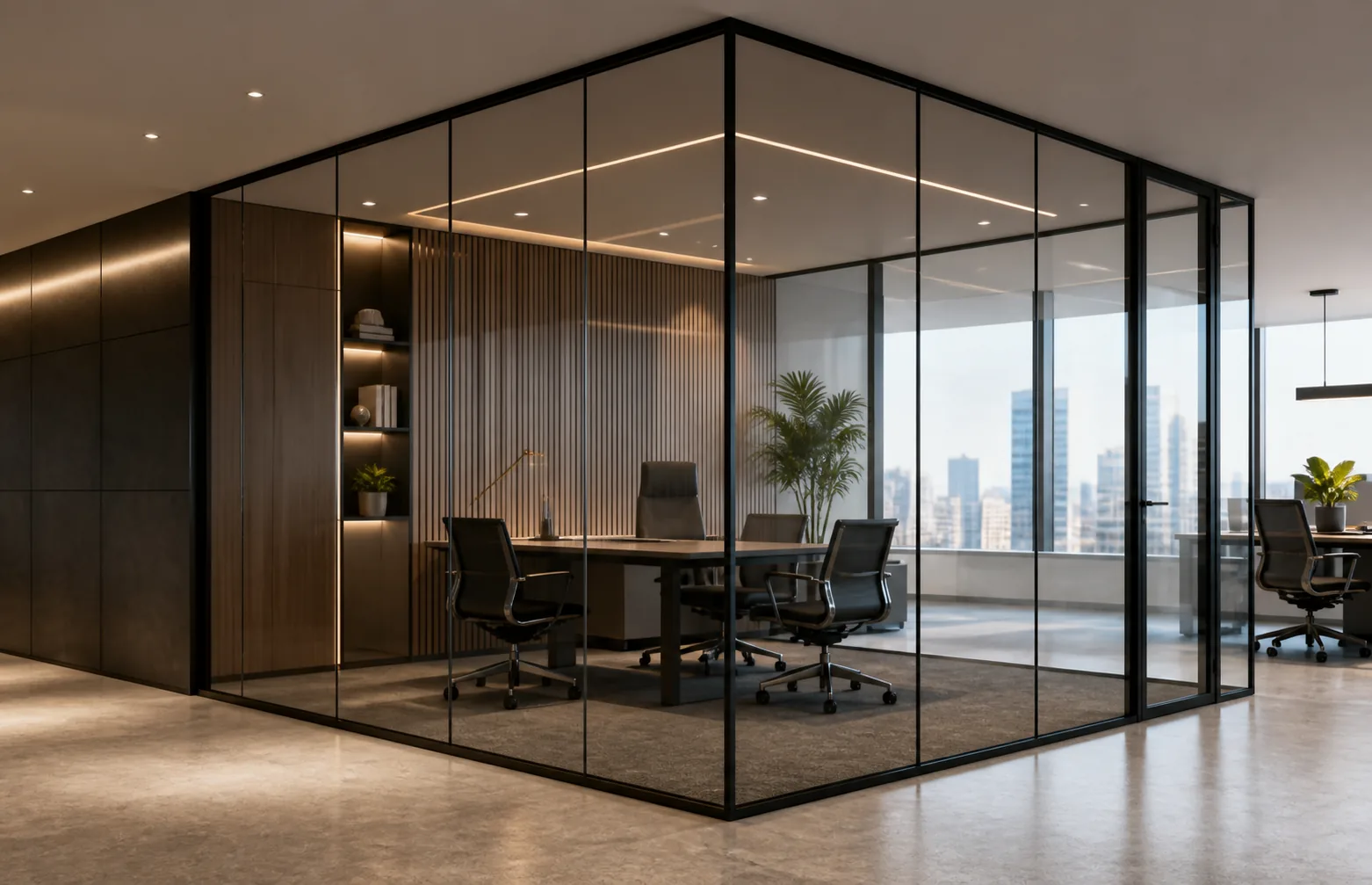
Slim profile.
Regular aluminium.
The real tradeoffs.
A straight comparison across profile depth, acoustics, aesthetics, cost, and maintenance. No marketing language.
The question most buyers have at shortlist stage.
Standard aluminium partitions are cheaper upfront. Slim profile systems cost more. The question is whether the gap closes over time, and whether the aesthetics are worth it for the space in question.
This guide compares both across five real axes: profile and glass spec, acoustic performance, aesthetics and finish, cost structure, and maintenance. The answer is not always slim profile. We say so where it is not.
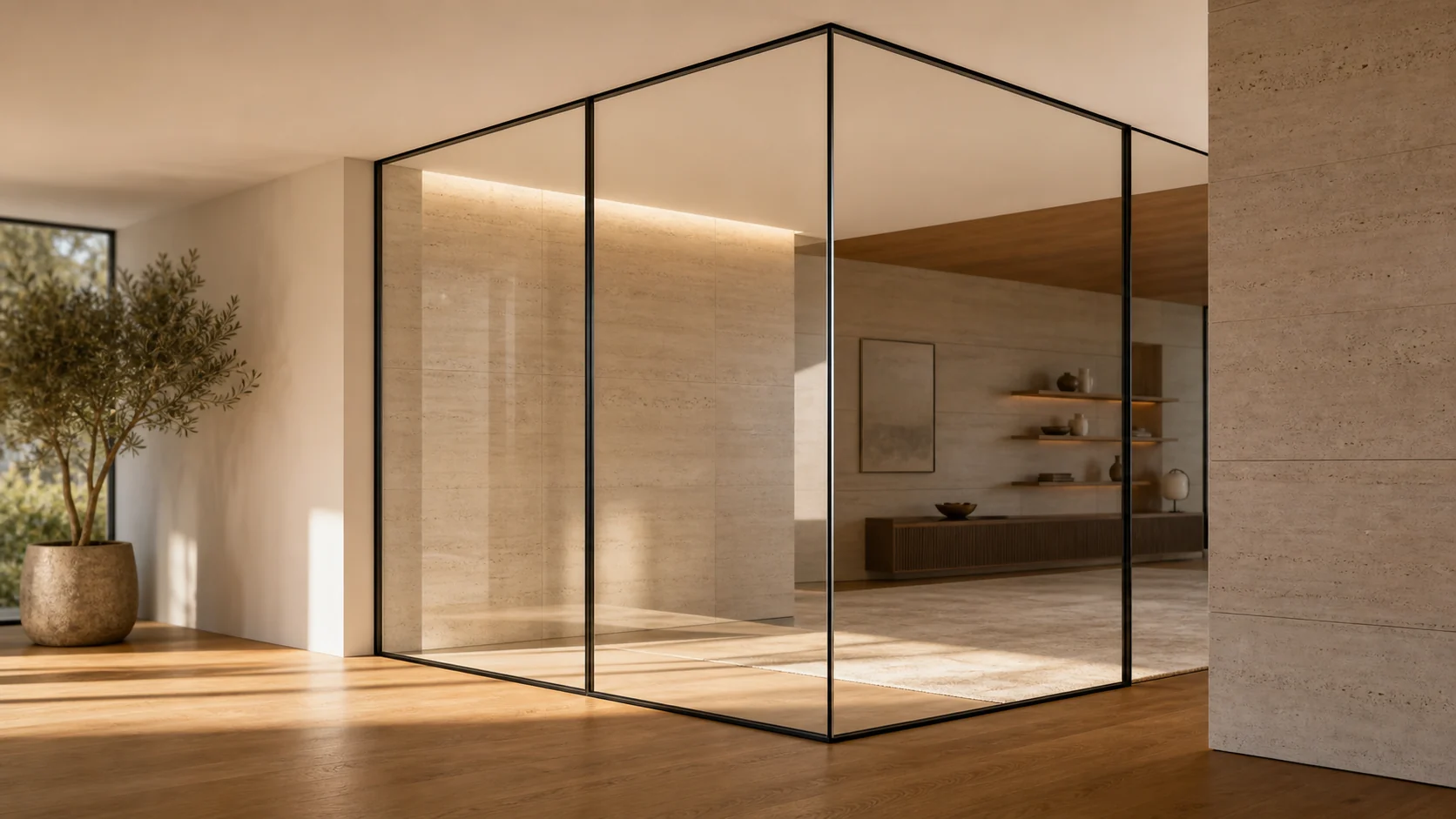
What the numbers actually say.
The difference between slim profile and regular aluminium is not a matter of opinion. It is a matter of specification: frame width, glass thickness, hardware load rating, and warranty terms.
0mm
visible frame at a glass-to-glass joint (slim profile)
0kg
per frame on BE-SLIM sliding systems
0yr
coating warranty on slim profile outer frame
Five axes. Compared plainly.
01: Profile and glass specification
| Factor | Slim Profile (BE-SLIM) | Regular Aluminium |
|---|---|---|
| Frame face width | As narrow as 25 mm visible on glass-to-glass joints | Typically 60–100 mm aluminium sections, fully visible |
| Frame depth | Shallow: anchors to the ceiling structure without a thick sub-frame | Heavier section; often needs a secondary fixing track |
| Glass size per panel | Up to 1200 mm wide, 3000 mm tall per sliding panel | Panel size constrained by the frame's racking resistance |
| Glass thickness | 8 mm, 9.52 mm, or 10 mm toughened and laminated safety glass | Usually 4–6 mm; not always toughened to IS 2553 |
02: Acoustic performance
| Factor | Slim Profile (BE-SLIM) | Regular Aluminium |
|---|---|---|
| Acoustic separation | Dependent on glass spec; 9.52 mm fabric laminated improves damping | Thin glass and open frame sections limit acoustic performance |
| Seal at head and floor | Engineered brush or compression seals; soft-close hardware closes flush | Mechanical seal quality varies by fabricator |
| Rattle under vibration | 120 kg per-frame sliding systems; panels held under controlled tension | Light frames can loosen over time, leading to rattle |
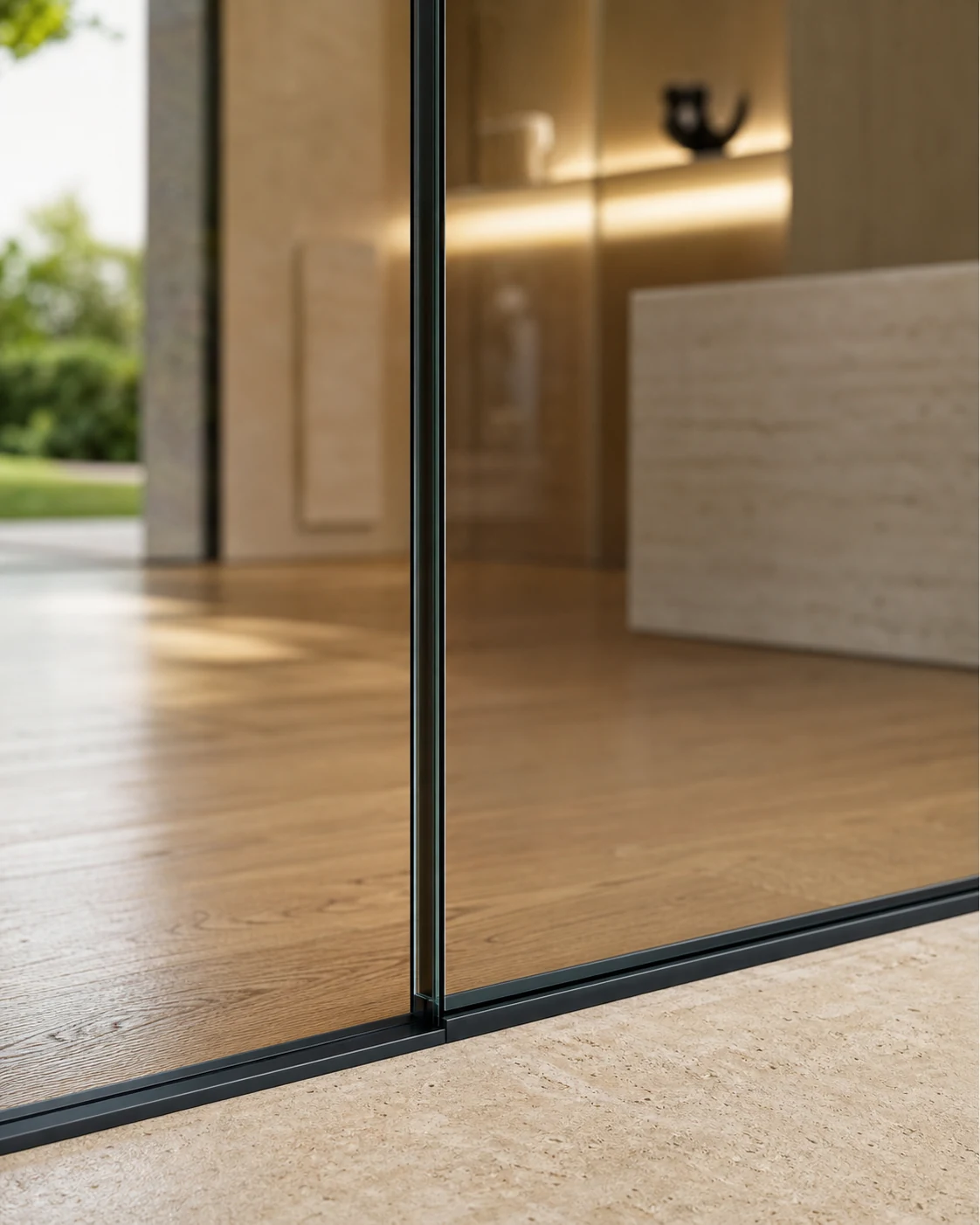
8 mm clear toughened glass. The slim profile standard.
03: Aesthetics and finish
| Factor | Slim Profile (BE-SLIM) | Regular Aluminium |
|---|---|---|
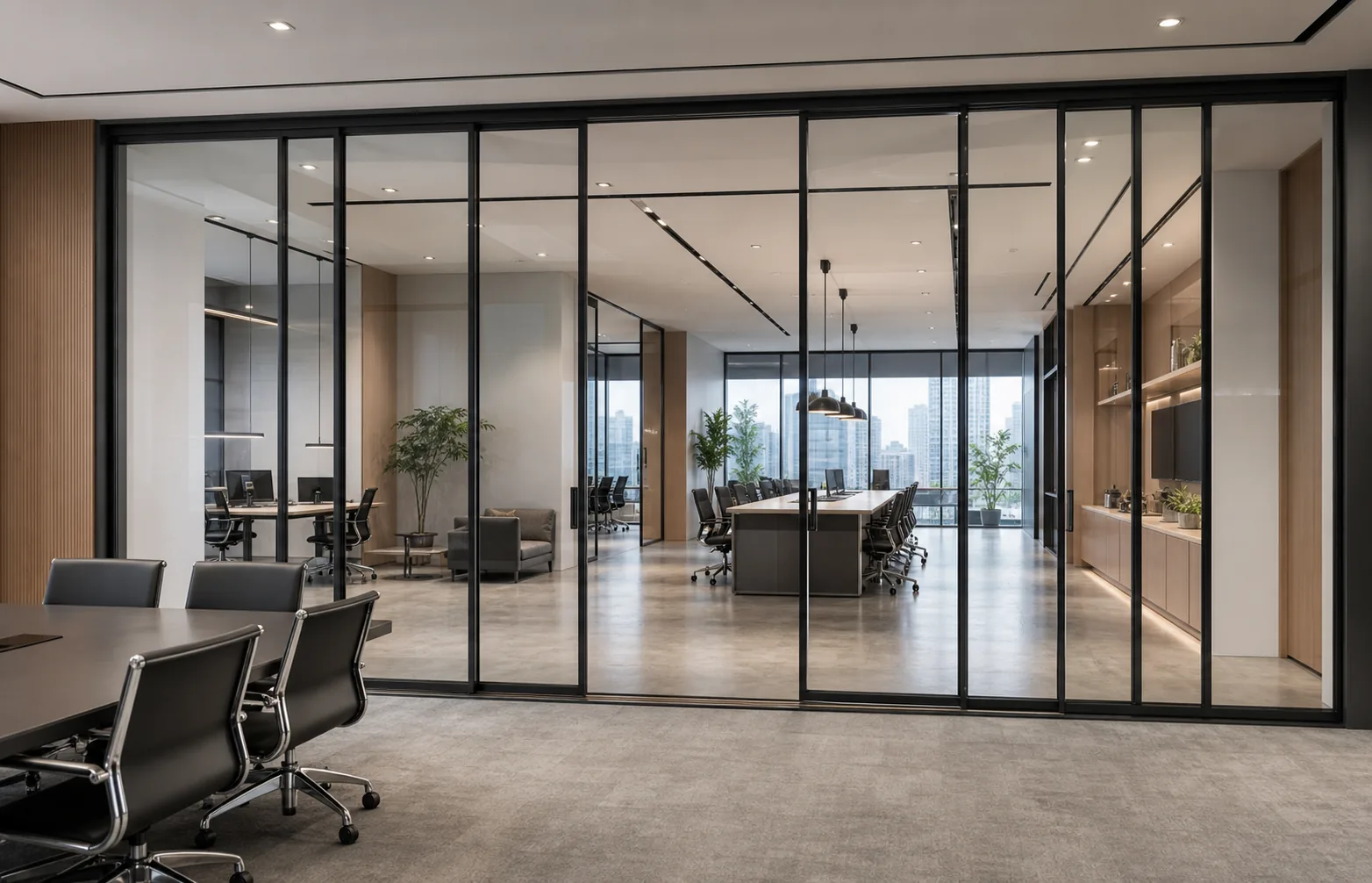
| Light transmission | Near-full pane visible; the room reads as one floor | Grid of frames interrupts the sightline |
| Finish options | Black matt, brushed gold, rose gold, anodised, powder-coated | Usually silver anodised or a limited powder-coat palette |
| Appearance over time | 10-year coating warranty on the outer frame | Warranty terms vary; surface corrosion common in 3–5 years |
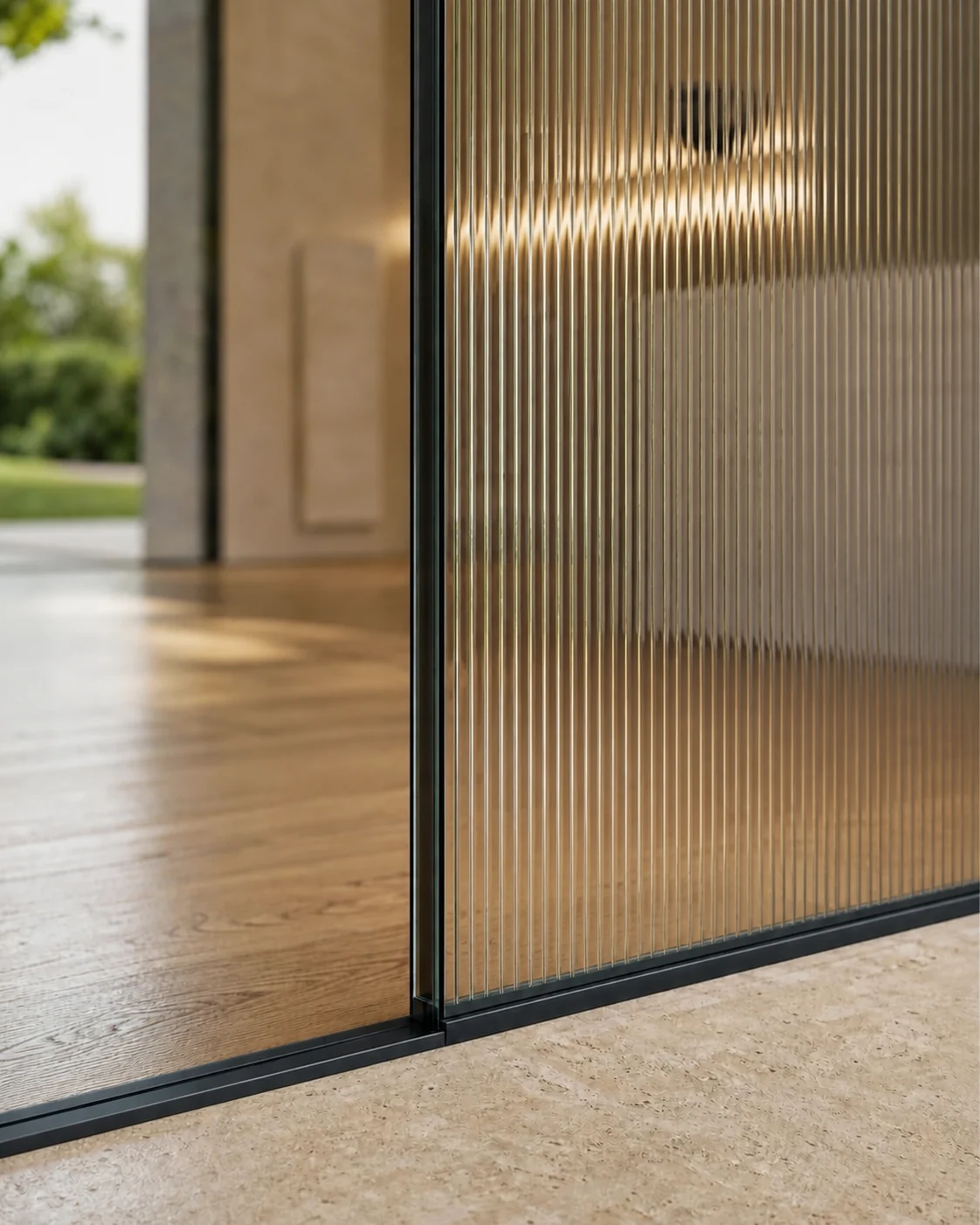
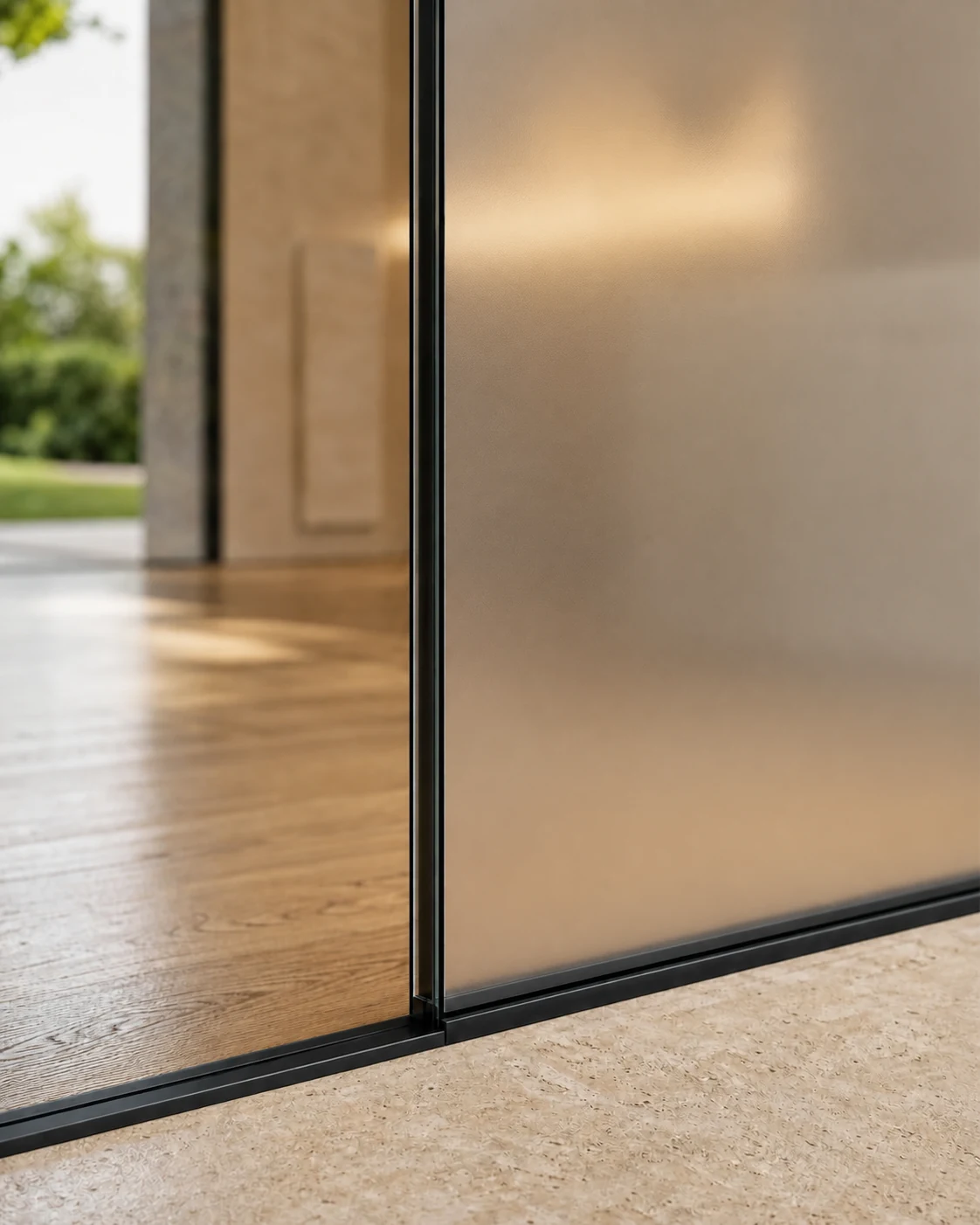
| Glass options | Clear, fluted, frosted, fabric laminated. Matched to privacy need | Usually clear or frosted; specialty glass harder to source and fit |
04: Cost structure
| Factor | Slim Profile (BE-SLIM) | Regular Aluminium |
|---|---|---|
| Initial cost per sq ft | Higher: precision profiles, certified glass, engineered hardware | Lower upfront: standard extrusions, commodity glass |
| Installation complexity | 15-day measured process: site survey, drawing, fabrication, installation | Often faster and simpler for basic fixed runs |
| Maintenance cost over 5 years | 3-year hardware warranty; 10-year coating; low ongoing cost | Frame corrosion, hardware failure, and seal degradation add up |
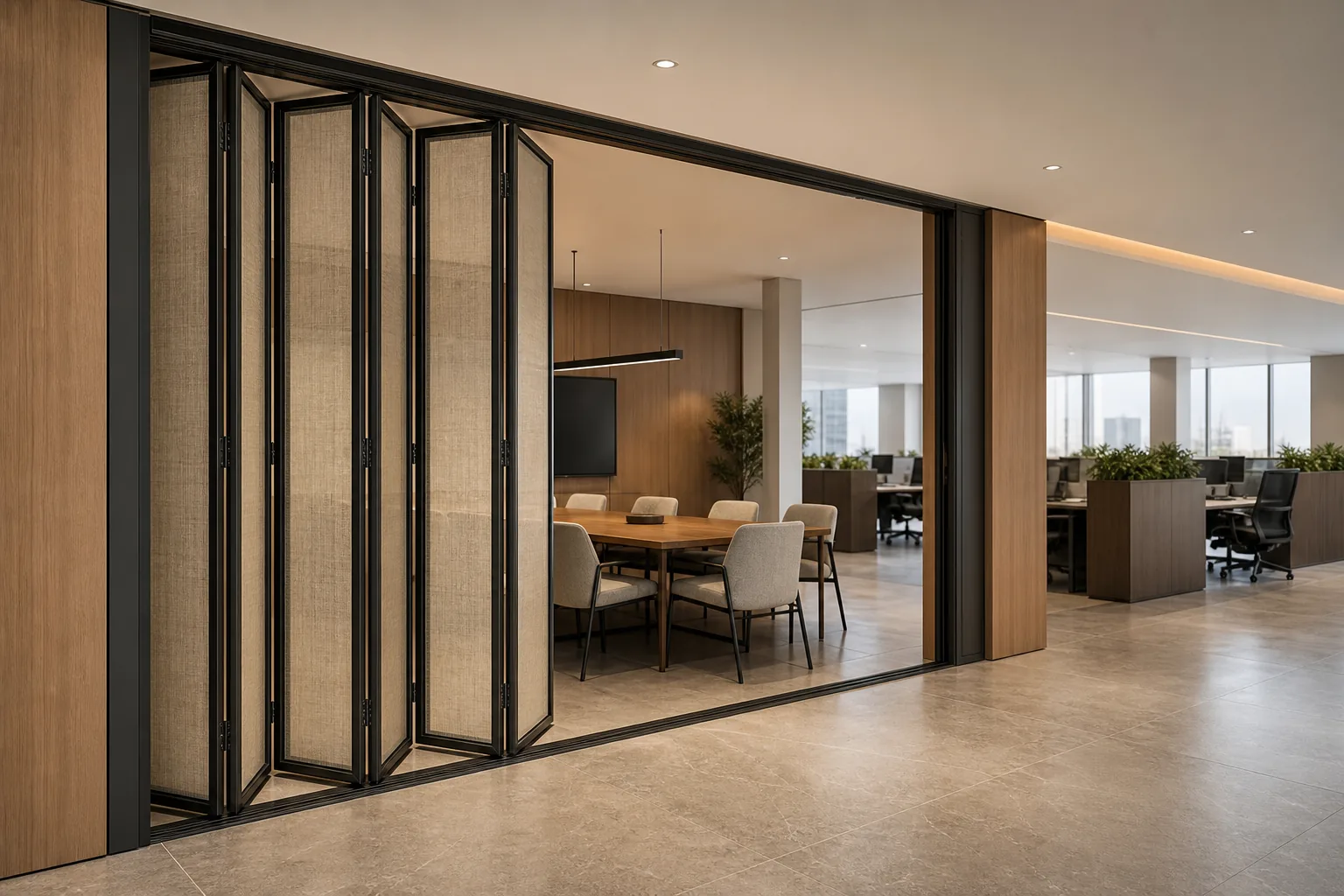
| Reconfiguration | Sliding and fold systems can be moved; fixed panels need dismantling | Fixed frame partitions are typically a one-time install |
05: Maintenance
| Factor | Slim Profile (BE-SLIM) | Regular Aluminium |
|---|---|---|
| Glass cleaning | Standard glass cleaner; no frame crevices to trap dust | Frame sections collect dust and are harder to wipe clean |
| Hardware service | Soft-close mechanisms and rollers are replaceable in place | Pivot hardware is usually simpler but fixed into the frame |
| Seal replacement | Brush seals and gaskets are replaceable without removing glass | Seal failure often requires a fabricator to re-glaze |
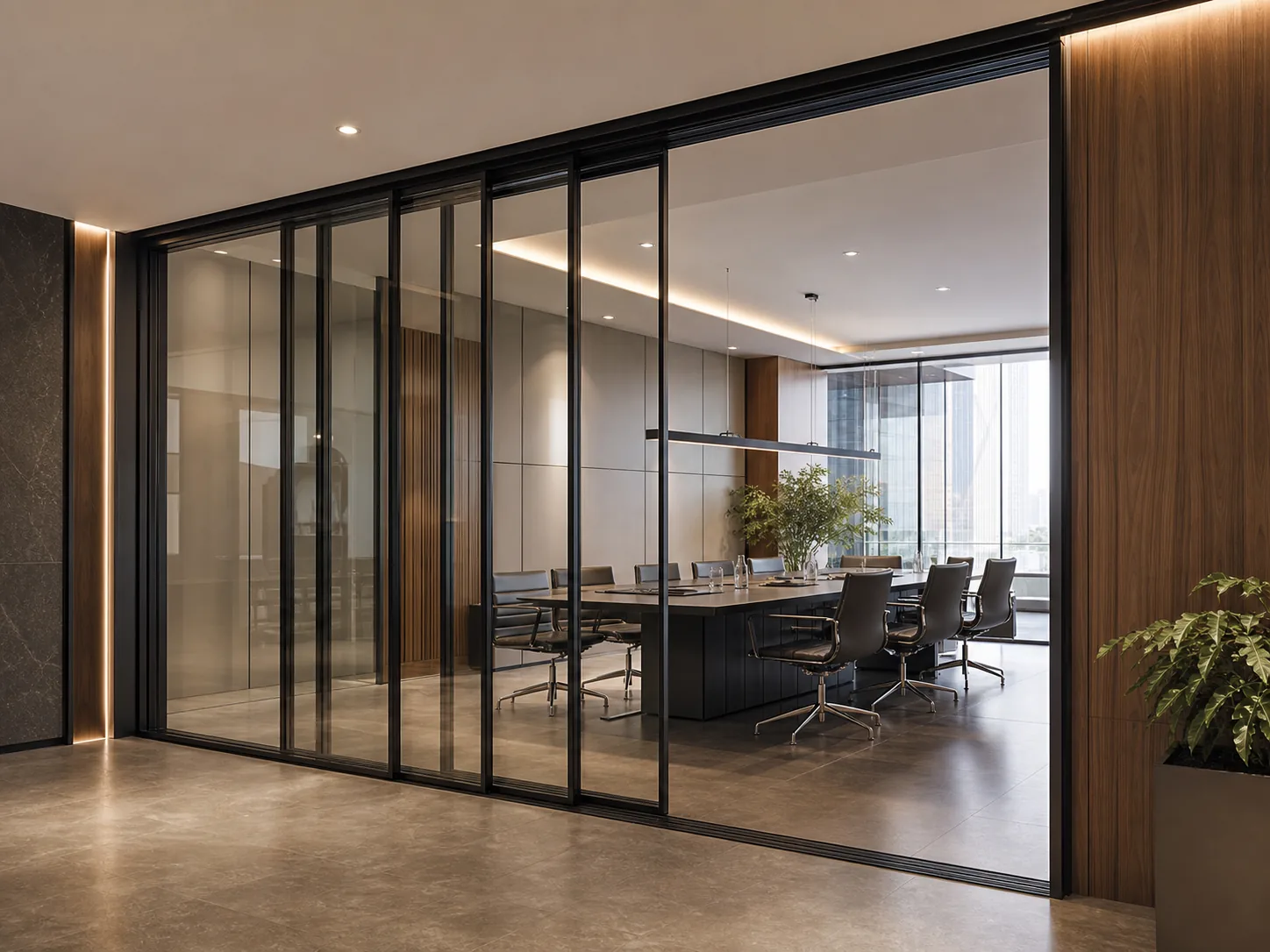
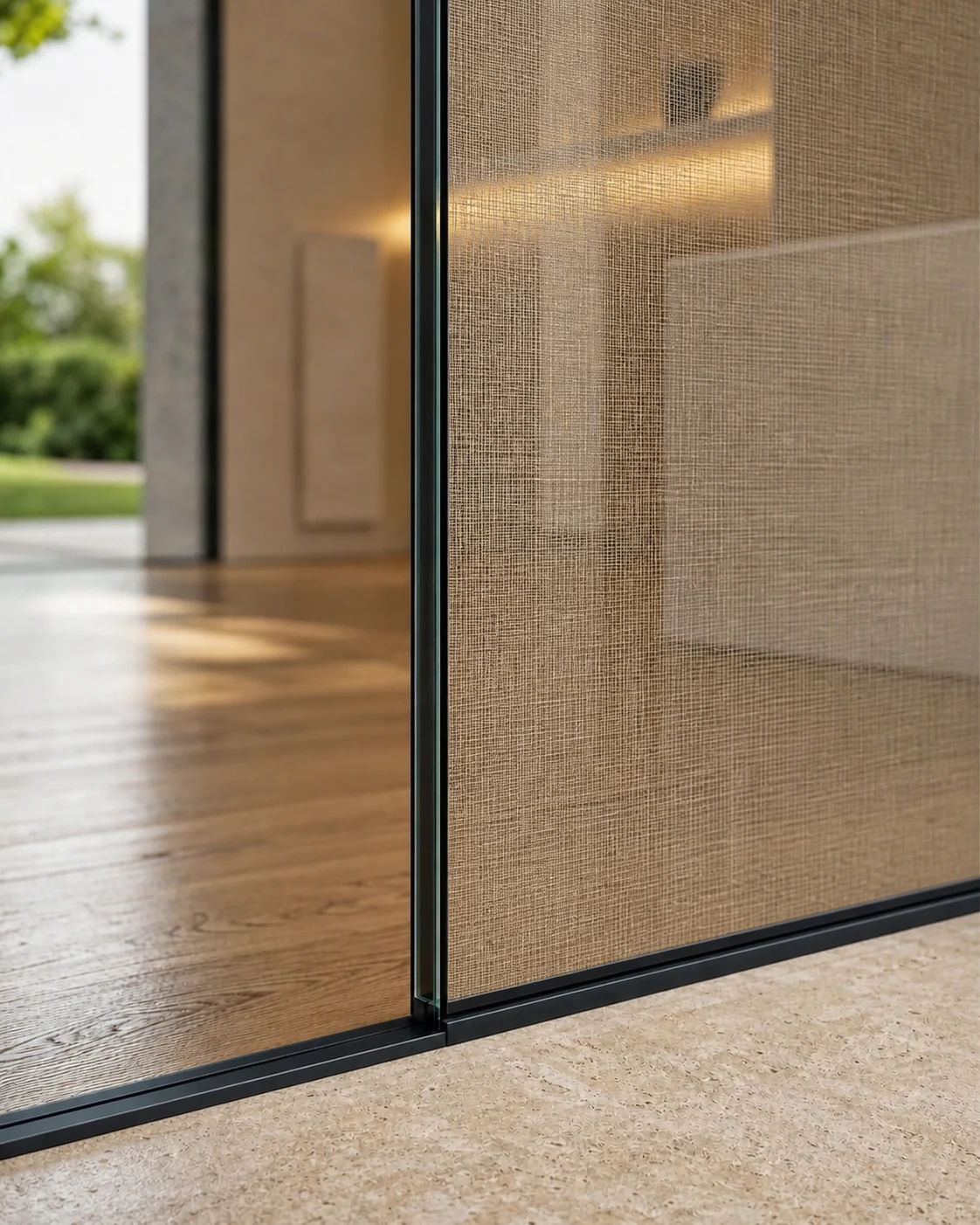
When to choose a slim profile system.
The space needs to stay open: a cabin that still reads as part of the floor.
The finish has to match a specified interior scheme (black matt, brushed gold).
You need sliding or fold configurations to open a large span.
Glass type matters: fluted, frosted, or fabric laminated for a specific privacy level.
The partition will be in view and appearance over five-plus years matters.
The project is architect-specified and needs documented warranties and IS-certified glass.
When a regular partition may be the right answer.
The partition will be in a back-of-house or low-visibility location.
The project is on a strict budget and aesthetics are secondary.
The configuration is simple: a short fixed run with no sliding or folding required.
The installation is temporary or is expected to be reconfigured within two years.
Not sure which fits your space? The Audit is a 20-minute WhatsApp or video consult. Send photos and rough dimensions, get a system and glass recommendation, and a budget range.
The glass changes the answer more than the frame.
In a slim profile system, the glass does the work. The frame steps back. Here is how to match the glass to what the space needs.
Clear toughened
When the room should stay one room. Full visibility, maximum light.
Fluted
When you want light without a direct view. Texture reads as material.
Frosted
When privacy matters more than transparency. Cabins, clinics, bathrooms.
Fabric laminated
When the glass has to be a surface. Sound damping and UV resistance.
Questions buyers ask at this stage.
The frame. A slim profile system uses a narrow, precision-engineered aluminium section, as little as 25 mm visible at a glass joint, so the glass dominates the view. A regular aluminium partition uses a broader, heavier section (60–100 mm is common) that reads as a grid of frames. Slim profiles also use heavier, certified safety glass (8–10 mm toughened or laminated) and engineered soft-close hardware; standard partitions often use lighter glass and simpler fittings.
Yes, in structural terms. BE-SLIM sliding systems carry 120 kg per frame in 8 and 10 mm toughened or laminated safety glass, certified to IS 2553. Standard aluminium partitions typically use 4–6 mm glass in a lighter frame. The strength is in the glass thickness and the hardware engineering, not the frame size.
It depends on the glass specification, not the frame alone. A slim profile system with 9.52 mm fabric laminated glass and compression brush seals will outperform a standard partition with 4 mm clear glass. The acoustic floor is higher because the glass is thicker and the seals are engineered to close flush. However, no interior glass partition achieves full sound isolation; both types attenuate, not block, airborne noise.
The upfront cost per square foot is higher for a slim profile system because the profiles, glass, and hardware are precision-engineered. The gap narrows over five-plus years when you factor in the 3-year hardware warranty, the 10-year frame coating, and lower maintenance costs. Regular partitions carry lower sticker prices but can accumulate hardware and finish costs in high-use spaces. Contact us for an indicative range for your specific configuration.
Sliding and fold configurations can be partially reconfigured: tracks can be extended, panels added, or the opening width adjusted within the same system family. Fixed slim profile panels, like any fixed partition, require dismantling to move. The advantage of a well-engineered slim system is that components and hardware are replaceable in place, so the system can be serviced without a full removal.
Yes. The same slim systems work for residential zoning. Living from dining, a home office from a bedroom, a kitchen from an open plan. The key difference is the glass and finish choice: homes more often use fluted or frosted glass for a warmer, more private feel, while offices lean toward clear toughened. The structural specifications are identical.
Not sure which is right for your space?
Send a few photos and rough dimensions. We reply with one system, one glass, one finish, and a budget range. No showroom visit to start.
The Audit is a 20-minute WhatsApp or video consult. No obligation.
Send photos of the space and a rough opening width.
We confirm the system, glass, and finish that fits.
You get an indicative budget range before a site visit.
Free Slim Space Audit